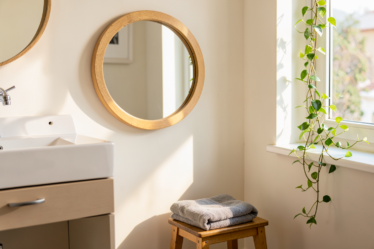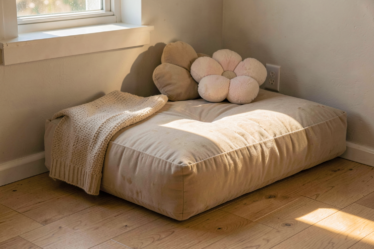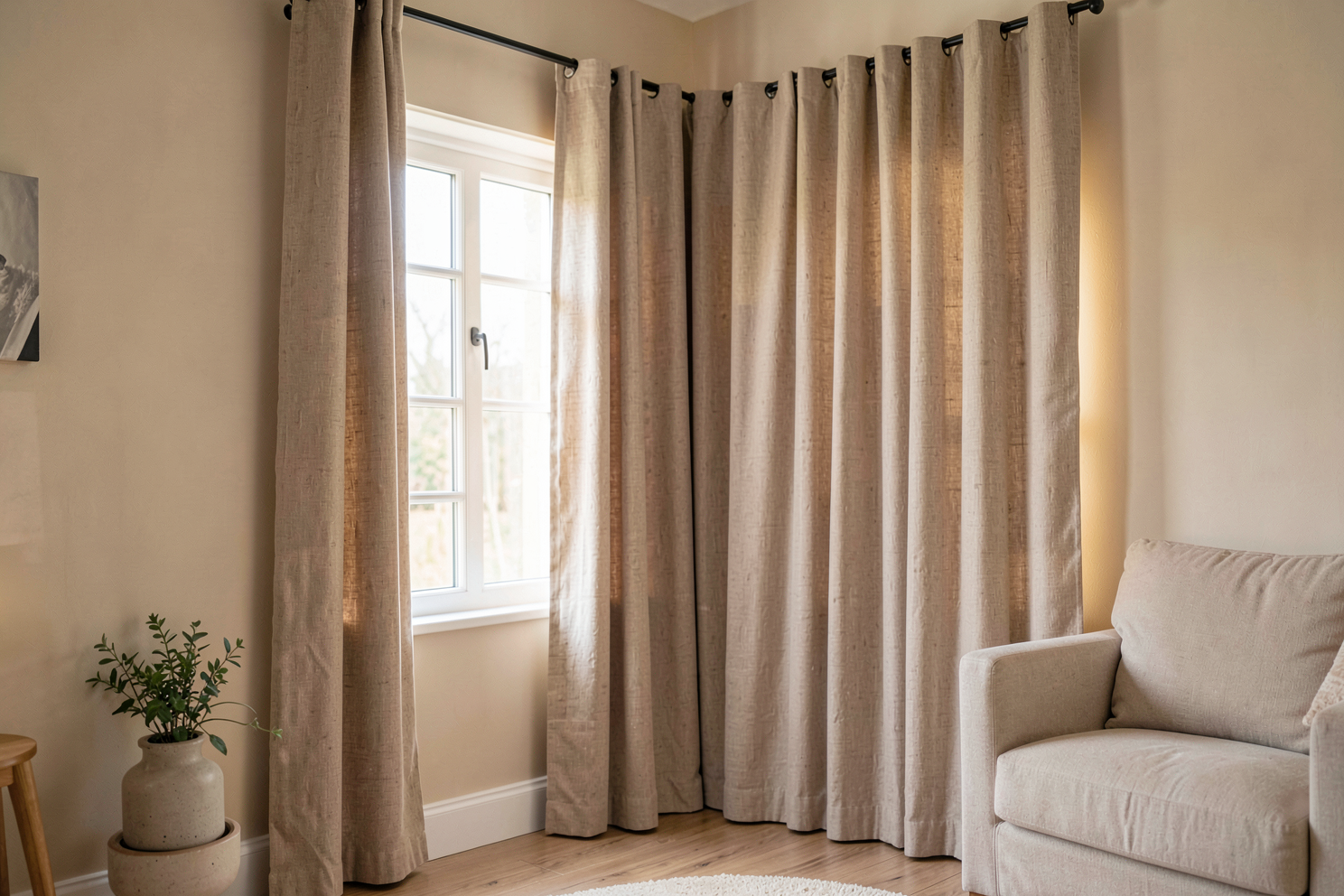
The fastest way to change how a room feels is not paint, and it is not a new lamp. It is the largest soft surface in the room, and most of us are staring at it right now. A bare or thin window throws hard light across everything and makes the walls read cold, even in a room that is technically warm. Swap that panel for a linen-textured blackout curtain and the whole wall changes temperature in about ten minutes. No drill, no rod replacement, no landlord conversation.
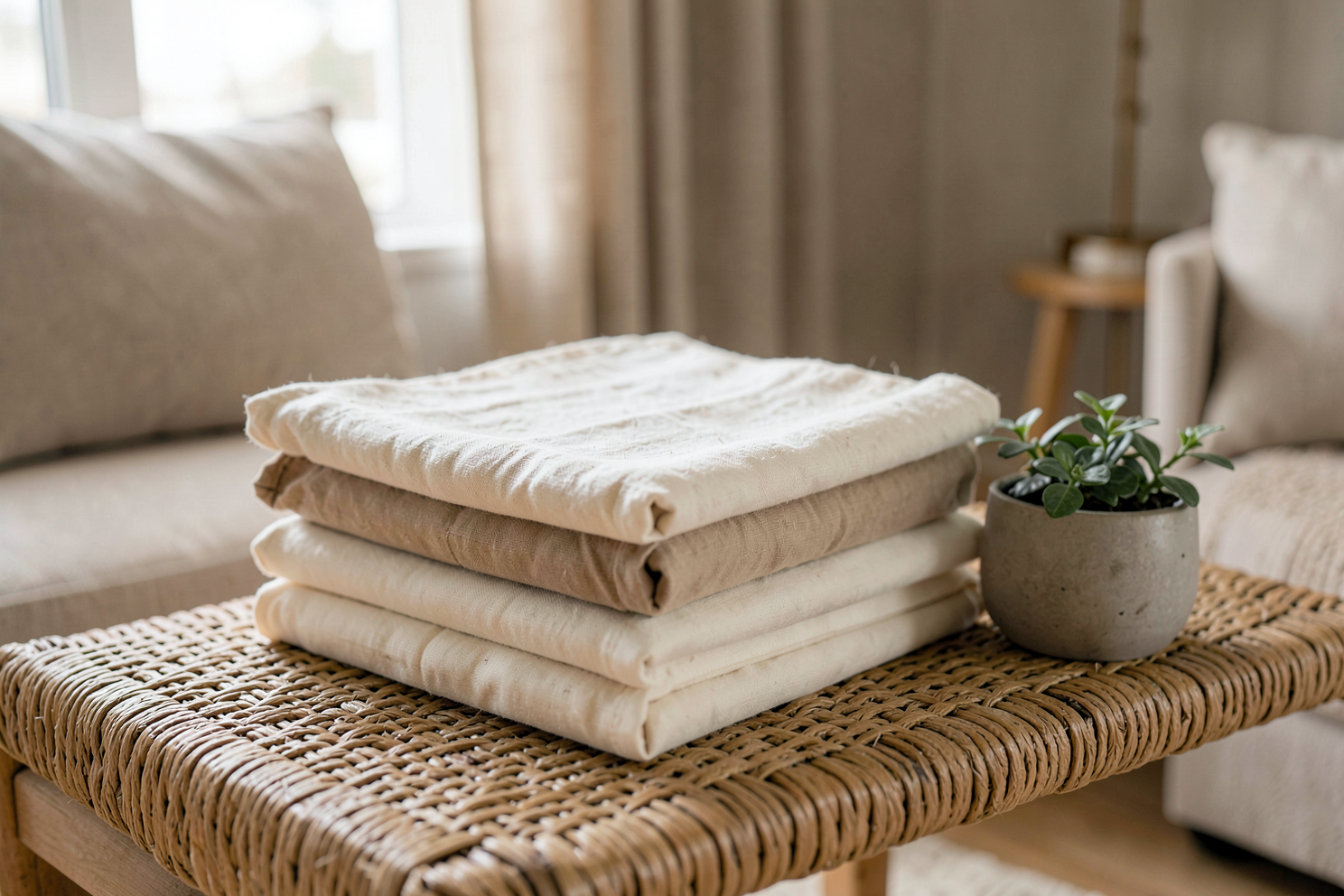
I say this as someone who reorganized a galley kitchen twice before admitting the first layout was wrong. I am not always fast. But this one I got right the first time, because the physics are simple: fabric absorbs light, and the color of that fabric decides what the light turns into.
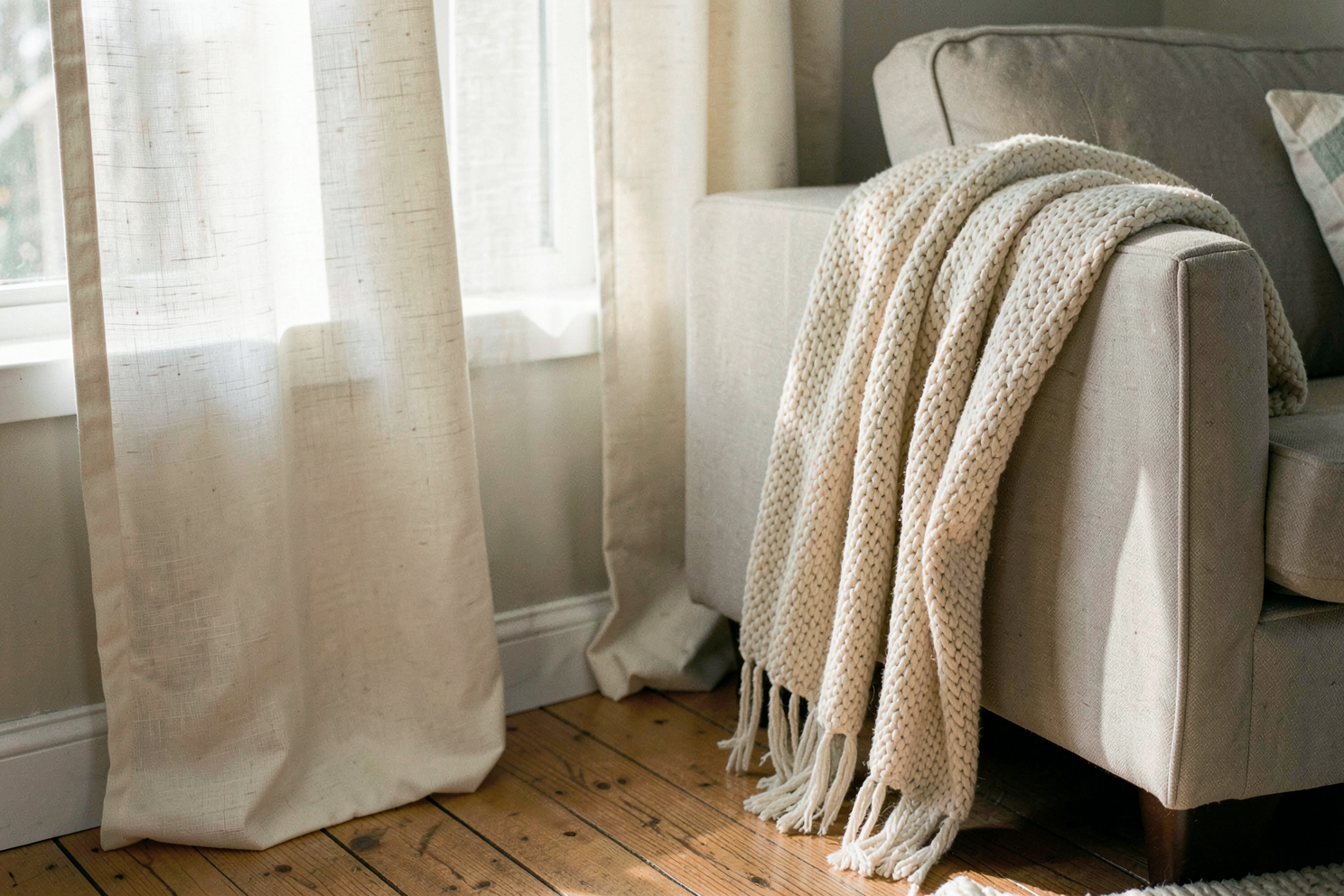
Why does a linen curtain make a room feel warmer than a plain blackout panel?
Because linen texture scatters light instead of bouncing it straight back at you. A smooth polyester blackout panel reflects hard; a linen-weave blackout panel breaks that light up across thousands of small threads and pushes it out soft and slightly golden. Same blackout rating, completely different wall.
This is the part people miss. Blackout is not one product. The coating behind the fabric does the blocking, and the face fabric decides the mood. You can buy a 100% blackout panel that makes your bedroom feel like a hotel conference room, or one that makes it feel like a Sunday morning. The difference is the weave and the color, not the blackout number.
The Linen Total Blackout Curtains ([NEED: confirm brand name — brief lists B0BR3STN87, 4.5 stars, 9,021 reviews, rank 1 in its category]) are the ones with the review base big enough to trust. Search "linen total blackout curtains" and you will find them. Topfinel also makes a cream linen-look panel ([NEED: confirm — B0DFWPKBG1, 1,617 reviews]) that costs less and is a little thinner. Drawback on both: linen-look fabric wrinkles in the package and needs a steamer or a warm dryer cycle before it hangs right. If you hang them straight out of the bag, you will see every fold for a week.
Which color should you actually buy?
Cream, oatmeal, or warm greige. Not white, not gray, not "natural" if the listing photo looks blue.
Here is the test I use. Hold the listing photo next to your wall in daylight on your phone. If the curtain looks brighter and cooler than your wall, it will make the room colder, not warmer. Warm neutrals sit slightly below your wall's brightness and pull the whole wall toward them.
White blackout panels are the most common mistake. They block light fine, but they read as a blank, and a blank wall at 7pm with one lamp on is the exact thing that makes a small room feel cold. Cream does the same job and adds about 200 kelvin of perceived warmth for zero extra dollars.
One more thing: match your bedroom and living room to the same color family. Not identical panels — same family. If the bedroom is oatmeal and the living room is warm gray, the apartment reads as two apartments. I keep both rooms in the same cream-to-oatmeal range and the place feels bigger because your eye stops re-adjusting at every doorway.
Length and drape matter more than the fabric
A curtain that stops at the windowsill makes a room feel short. A curtain that reaches the floor makes the ceiling feel higher, and height reads as warmth.
Two numbers to get right. First, mount or hang so the top of the panel sits at least 2 inches below the ceiling, or all the way at it. Second, the bottom should touch the floor or break by less than an inch. Anything in between — the classic 4-inch float — looks like the curtain shrank.
Drape is the second half. A panel needs some weight to hang in soft folds instead of a flat sheet. Look for a panel that is at least 1.5x the width of your window. A 40-inch window wants a 60-inch panel minimum. Wider than that and the folds get deeper and the wall gets warmer.
If you already own short curtains and cannot replace them, you can still fix the read. Raise the rod as high as it will go and let the hem sit where it sits. It is not perfect, but it beats a curtain that ends mid-wall.
How do you hang linen curtains in a rental with no drilling?
Use a tension rod inside the window frame, or an adhesive curtain rod bracket if your frame has no inside depth. Both hold a linen-look blackout panel fine if you follow the weight limit.
Tension rods are the safer bet. Measure the inside width of your window frame and buy a rod rated at least 5 pounds heavier than your panel. A single 52×84 linen blackout panel runs roughly 2 to 3 pounds, so a rod rated for 7 pounds or more is comfortable. Search "tension curtain rod 28 to 48 inch" and check the weight rating in the listing, not the photo.
Adhesive brackets work on smooth painted drywall and fail on textured walls, wallpaper, and anything near a radiator. If you go that route, clean the spot with rubbing alcohol, press for the full 30 seconds the instructions say, and wait 24 hours before hanging anything. I have watched a bracket give up at hour six because someone skipped the wait.
The honest drawback on both: neither will hold a heavy lined velvet panel, and neither survives a cat that treats the curtain as a climbing structure. Biscuit has tested this. The rod lost.
What if the room is still cold after the swap?
Then the problem is not the window, it is the light source, and no curtain will fix it. Curtains change how daylight and lamp light land on the wall. They do not change a bulb.
Before you buy a second panel, check two things. Swap your brightest bulb to 2700K if it is currently 4000K or higher — that alone warms a room more than most decor purchases. Then look at what is under the window. A bare floor under a curtain undoes half the effect, because the eye follows the fabric down into a cold, hard surface. A $30 rug or even a folded throw blanket at the base of the panel finishes the wall.
If both of those are handled and the room still reads cold, the curtain color is wrong. Go warmer, not darker. Oatmeal beats charcoal every time in a small room.
The cheapest first step
Buy one panel, not two, and hang it on the window you actually sit next to. Cream or oatmeal, floor length, at least 1.5x your window width. Live with it for a week before you commit to the rest of the house.
If it works — and it usually does — you will know within one evening. If it does not, you are out the cost of a single panel and you have learned what your room's light actually does, which is worth more than the panel.