My entry is 5 feet by 6 feet. No closet in it, no mudroom behind it. For the first two years in this house the floor by the door held shoes, a bag, and whatever the mail carrier handed me. The door itself was blank the whole time.
That's the thing about a door. It's already hung, already framed, already there. You don't buy it, you don't assemble it, and nobody has to walk around it. It's the last vertical surface in a small entryway that most of us never use.
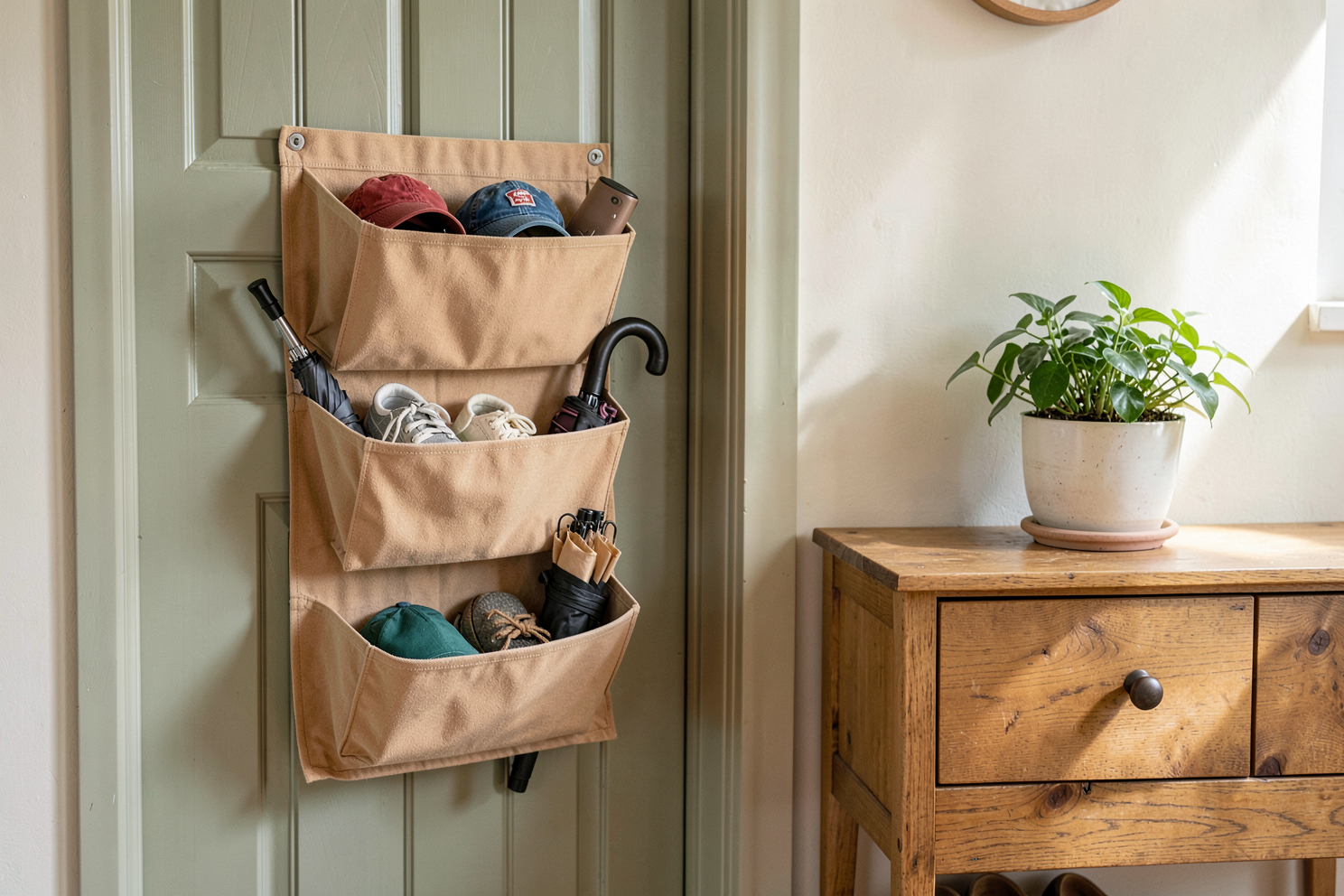
A five-tier over-the-door organizer is the cheapest way to use it. The one I'm writing around is the Ofiray-home over-the-door organizer, five tiers, extra large (search "Ofiray-home over the door organizer 5 tiers"). It hangs on the door with hooks, no drilling, and gives you five stacked pockets for shoes, bags, hats, and the small stuff that otherwise lands on the floor.
Here's what it actually does, what it doesn't, and how to pair it so the entryway stops being a pile.
What actually fits in five tiers?
Shoes on the bottom two tiers, bags in the middle, and small stuff up top — that's the working split. The bottom pockets take the weight, the middle holds the shape, and the top tier is where keys, gloves, and the dog's leash live so they don't migrate to the kitchen counter.
The pockets on a five-tier unit are deep enough that a pair of sneakers sits down in them instead of perching on the lip. That matters more than tier count. A shallow pocket on a tall organizer is just a shelf that drops things.
What I'd put where, roughly:
- Bottom tier: the two pairs of shoes you actually wear this week. Not the whole rack. Rotation only.
- Second tier: the everyday bag and the reusable grocery totes that otherwise breed in the car.
- Third tier: hats, scarves, the umbrella you keep forgetting.
- Fourth tier: keys, sunglasses, the small dish-worth of pocket clutter.
- Top tier: seasonal overflow — gloves in October, sunscreen in June.
One drawback worth saying out loud: a loaded five-tier organizer is heavy, and it hangs on the door, not the wall. On a hollow-core interior door it will swing and thump when the door moves. Ours is fine because the entry door gets closed gently, but if your door gets slammed by a kid or a cat, expect noise.
Does it really install without drilling?
Yes — the hooks sit over the top edge of the door and the whole thing hangs. No screws, no anchors, no landlord conversation. That's the entire appeal for a rental, and it's why I'd start here before I'd start with a wall-mounted system.
The catch is door clearance. The organizer adds thickness at the top of the door, so check the gap between the door and the frame before you load it. A tight frame plus a full organizer equals a door that won't close. Measure the gap at the top, not the side, because that's where the hooks sit.
The other catch is the door type. Hollow-core doors are light and they flex. A five-tier unit with shoes in the bottom pockets puts the weight low, which helps, but a hollow door will still feel the pull when you open and close it. Solid doors don't care. If you're not sure which you have, knock on it. Hollow sounds hollow.
Over-the-door organizer or a freestanding coat rack?
They solve different halves of the same problem, and the honest answer is you probably want both. The organizer handles small, light, and vertical. The rack handles bulky, heavy, and horizontal.
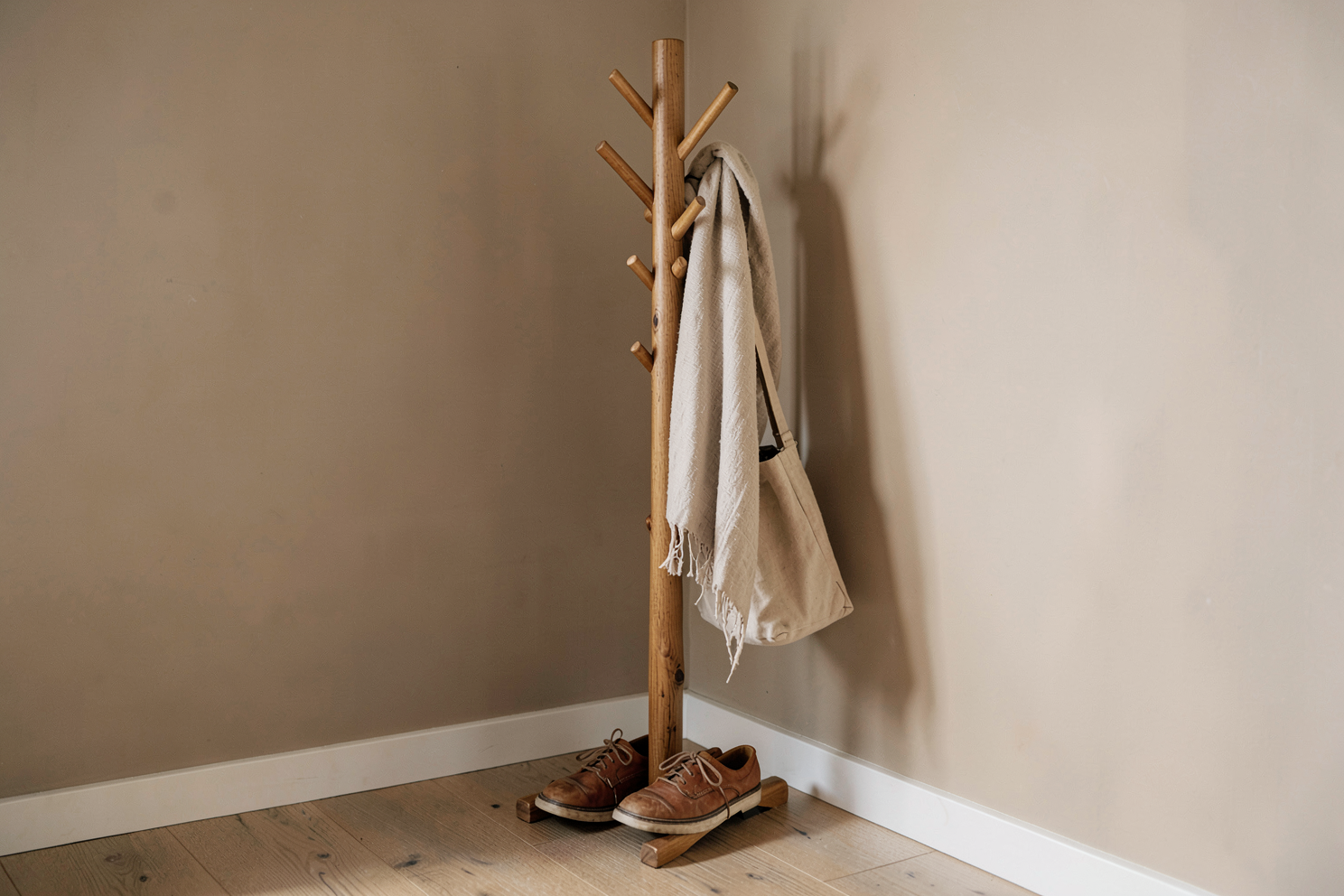
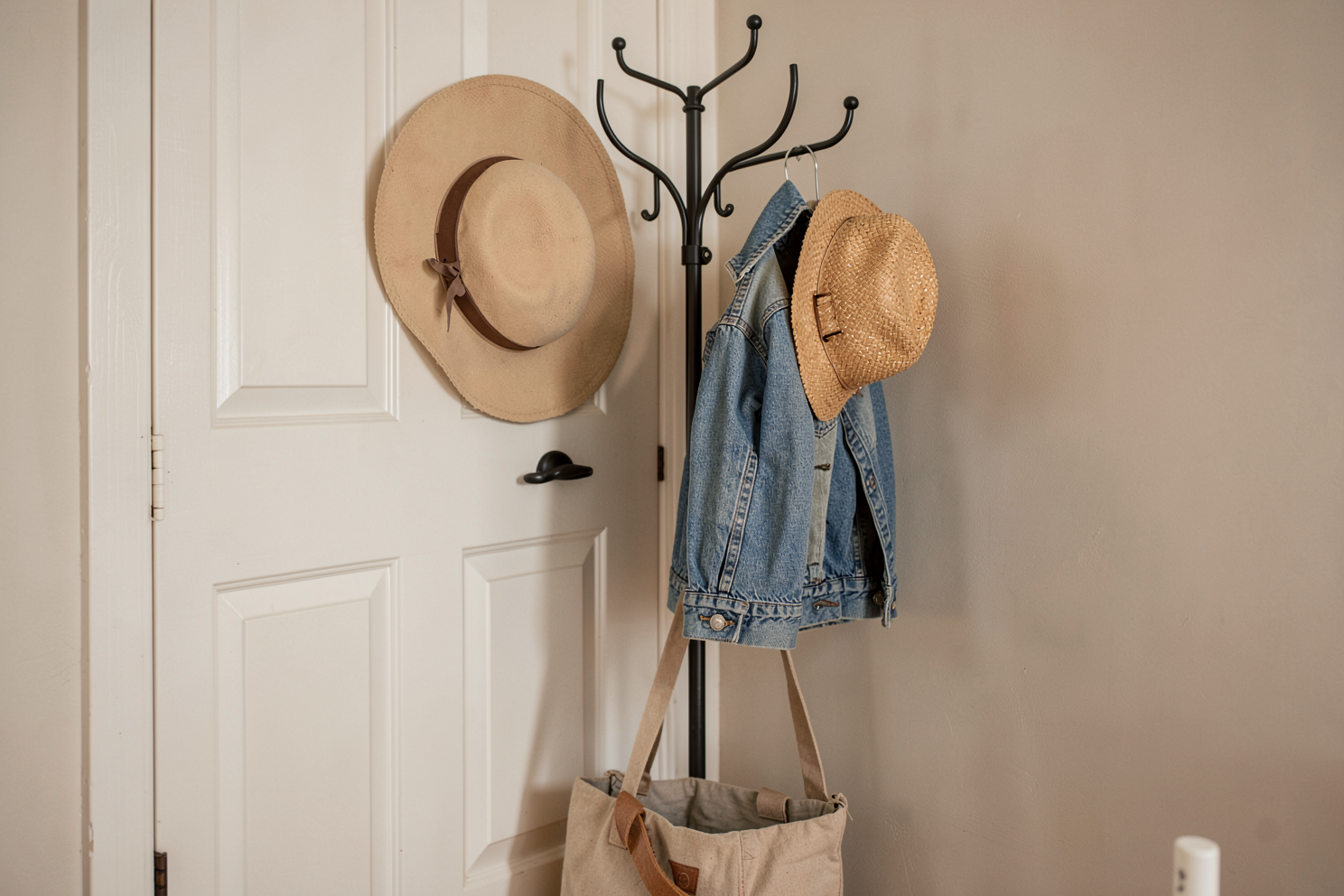
The WANGMUXIA freestanding coat rack with 8 hooks (search "WANGMUXIA freestanding coat rack 8 hooks") is the budget hook station that pairs with the door tiers. It's 4.4 stars across 5,497 reviews, and it holds the coats and the heavy bag that would otherwise drag the organizer out of shape. The door unit keeps the floor clear; the rack keeps the bulk off the door.
The pairing is the point. Door organizer for the small stuff at eye level. Coat rack for the big stuff at hip level. Shoe tray on the floor for the wet boots. That's a complete entryway circulation path in a 5-by-6 space, and none of it needs a closet.
If you only buy one, buy the door organizer first. It costs less, it uses space you already have, and it fixes the pile by the door faster than a rack does.
How do you keep it from becoming a junk drawer?
Label the tiers by what they hold, not by a label maker. A label on a messy tier is still a messy tier — I've made that mistake with drawers and I'm not repeating it on a door.
The rule that works in our house: one item category per tier, and if a tier won't close flat, something in it doesn't belong there. The organizer is a routing station, not a storage unit. Shoes go in, shoes come out the next morning. The bag goes in, the bag comes out when you leave. The moment a tier becomes permanent storage, it's a shelf with fabric sides.
I purge the entryway coats every March and October, and the door organizer gets the same treatment. Two seasons a year, empty each tier, put back only what you used since the last pass. It takes ten minutes and it's the difference between a system and a stuffed pocket.
The cheapest first step, if you're not ready to buy anything: clear the floor by the door tonight and look at how much of that pile could hang. That's your tier count. Then buy the organizer that matches it, not the tallest one on the page.
• Ofiray-home Over the Door Organizer 5 Tiers, Extra Large Behind Door Storage · 24.28 — Five extra-large tiers mount with no drilling for $24.28, turning a blank door into entryway storage without giving up a single inch of floor.
• WANGMUXIA Coat Rack, Freestanding Coat Rack with 8 Hooks · 23.99 — At $23.99 with 4.4 stars across 5,497 reviews, it is the budget-friendly hook station that pairs with the over-the-door tiers.