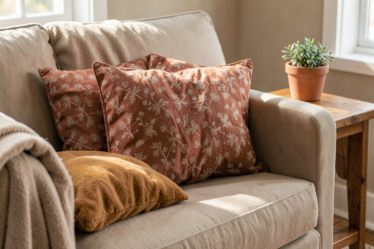
My sofa is the color of oatmeal. It has been the color of oatmeal since 2019, and every October I look at it and think about buying a new one. Then I do the math and buy a pillow cover instead.
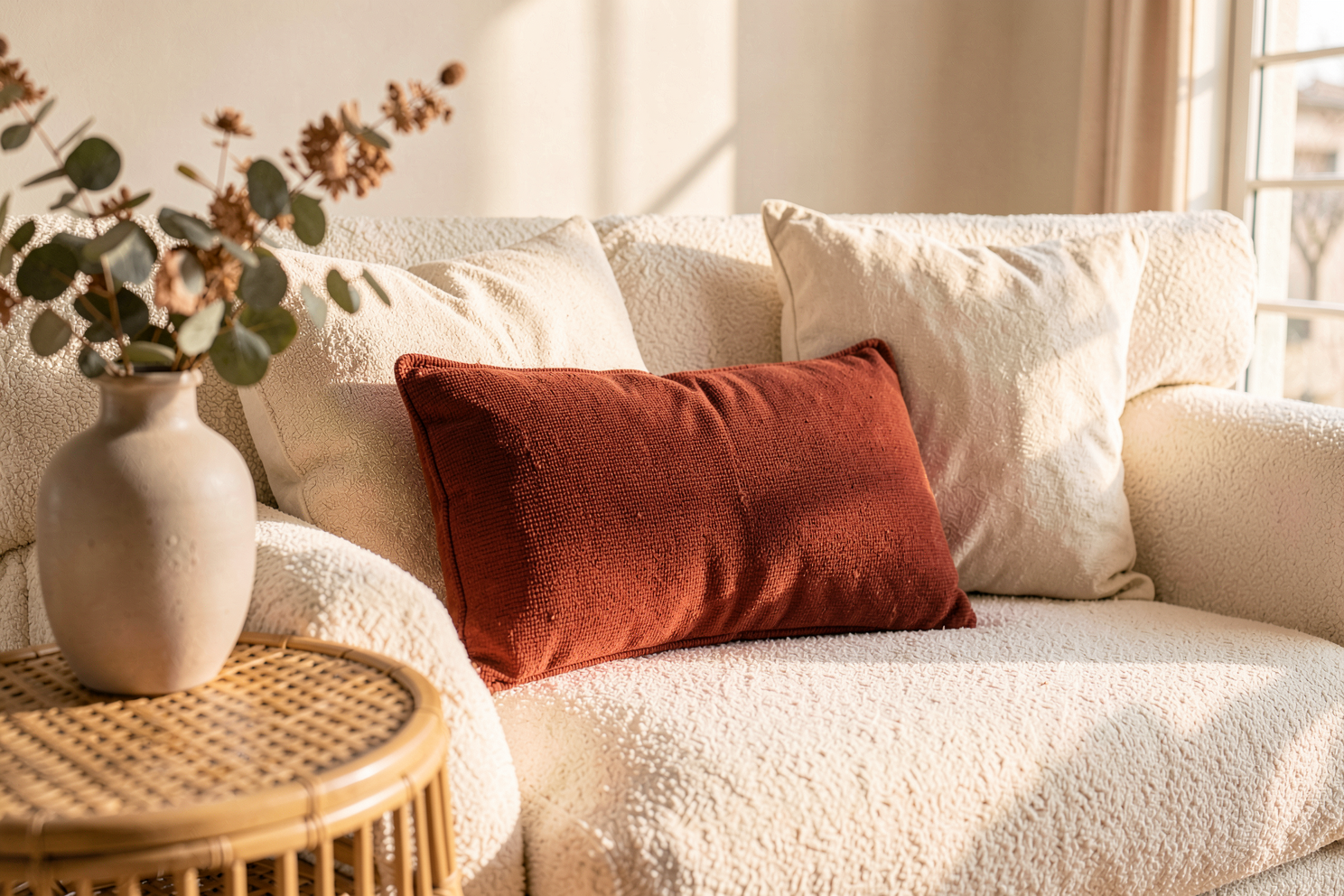
That's the whole method. One lumbar pillow in front, two square pillows behind it, and the sofa reads warm for fall. Ten minutes, no furniture, no rearranging the living room. I've done this swap every fall since [NEED: year], and it works because of the shape, not because of the color.
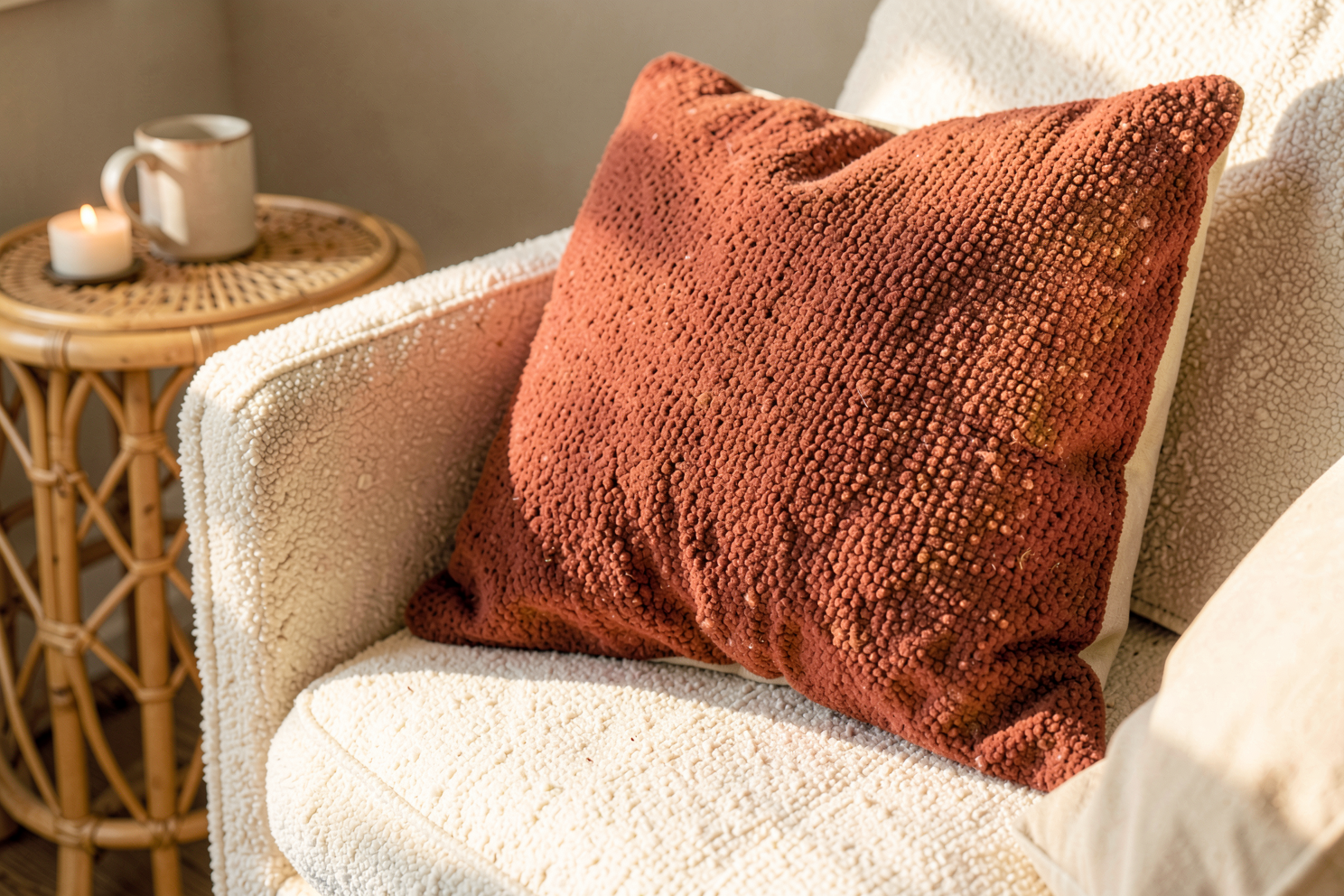
Why a lumbar pillow instead of another square one
A lumbar pillow is wide and short, usually something like 12×20 or 14×22 inches, and that shape is what changes the sofa. Square pillows stacked three across look like a display. A lumbar pillow sits alone in the middle, low and horizontal, and the eye reads it as one deliberate object instead of a pile.
The other thing a lumbar does: it leaves the top of the sofa back visible. If your sofa has a nice back cushion or a slight curve, three square pillows bury it. One lumbar keeps the silhouette. In a small room that matters more than it sounds. A buried sofa back makes the whole wall feel heavier.
I keep two square pillows behind the lumbar and stop there. Three is the ceiling. Four starts looking like a hotel lobby, and I say that as someone who has tried four.
What's the right ratio of lumbar to square pillows?
One lumbar pillow plus two square pillows is the ratio that holds up on a standard 84-inch sofa. Put the lumbar centered, then one square pillow on each side, slightly angled toward the arms. If your sofa is under 70 inches, use one lumbar and one square, because two squares on a small sofa crowd the seat. On a sofa 90 inches or longer, two lumbar pillows with two squares behind them still reads calm. The rule is one lumbar per seating position, not one per sofa.
Which fall colors actually warm up a neutral sofa
Rust and caramel, in that order. Rust is the one that does the work. It's dark enough to register against oatmeal or greige, and it pulls warm without going orange. Caramel is the softer version, better if your sofa leans gray rather than beige. Cream is the third piece, and it's a background color, not a main one.
Here's the formula I use: one rust pillow, one cream or off-white pillow, one in between. The in-between is usually caramel. That gives you three values, dark, mid, light, which is why it doesn't look flat.
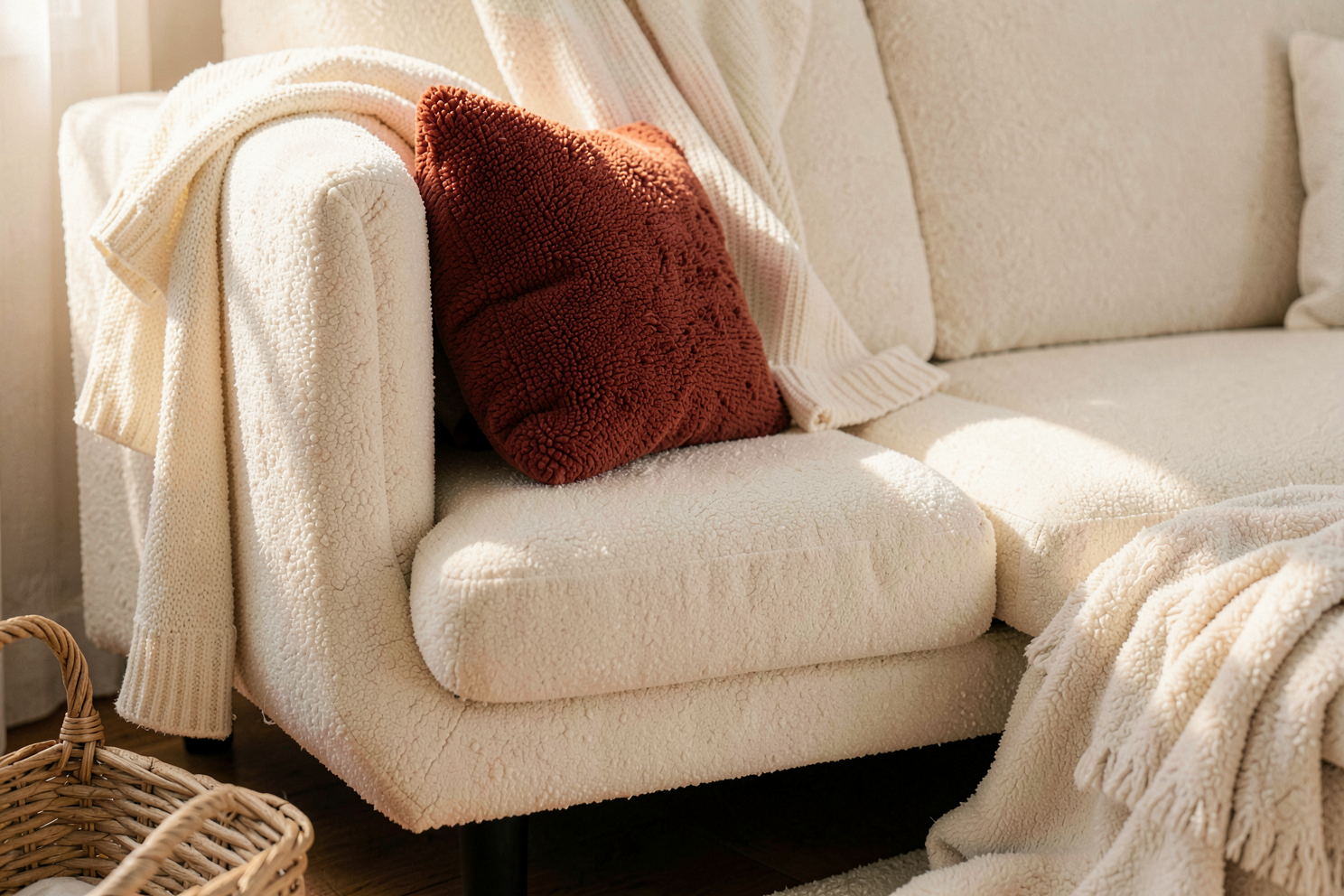
If you want to see the exact palette, search "MIULEE chenille burnt orange pillow covers." I've bought the chenille ones and the texture is the reason. It reads more expensive than it is, and it layers well next to a flat rust. The drawback is that chenille picks up cat hair like nothing else in my house, and Biscuit sleeps on that end of the sofa, so I keep a lint roller in the side table drawer.
For a flatter, more saturated rust, search "Fancy Homi rust pillow covers." Those are a smoother weave and they photograph darker than they look in person, which is worth knowing if your sofa is already on the warm side.
Do you have to change the pillow inserts too?
No, and this is where people waste money. If you already own square pillows, you only need new covers for those, plus one lumbar insert. Buy the lumbar insert one size up from the cover, so a 14×22 cover takes a 16×24 insert, and it looks full instead of sad and deflated. That single sizing trick is the difference between a styled sofa and a limp one.
One warning on inserts: the cheap poly-fill ones flatten within a season. I've replaced [NEED: number] of them. If you're buying one lumbar insert, get a feather-down or a down-alternative and accept the extra cost, because you'll buy it once.
The ten-minute swap, in order
Take everything off the sofa. All of it, including the throw blanket.
Put the two square pillows on first, one at each end, angled slightly. Then the lumbar in the center. Then step back and look at it from the doorway, not from two feet away. This is the part people skip and it's the part that tells you if the ratio is wrong.
If it looks cluttered, remove a square pillow. If it looks empty, you probably need the lumbar insert one size bigger, not another pillow.
Then add the throw back, folded, on one arm. Not draped across the whole back. One arm.
What I'd skip
Buying a lumbar pillow in a print. Prints date fast, and a lumbar pillow is the most visible cushion on the sofa because it sits in front. Solid rust, solid caramel, solid cream, those three will still work in three years. I have a patterned lumbar from [NEED: year] that I keep in the closet because I can't bring myself to donate it and I also can't put it back on the sofa.
Also skip the thin acrylic pillow organizers if you're storing the off-season covers. Mine cracked under a stack of cereal boxes in the garage, which is a stupid place to keep pillow covers anyway. A fabric storage bin with a lid works better and doesn't shatter.
The cheapest first step
If you're not sure about rust, buy one cover and live with it for a week before you buy the second. At the price these run, one cover is a low-risk test, and a week is enough time to see it in morning light and evening light, which are two different colors on the same sofa.
Start with the lumbar. It's the piece that changes the most and costs the least, and if it doesn't work, you've lost one cover instead of a whole sofa's worth.
• MIULEE Soft Chenille Fall Throw Pillow Covers Burnt Orange · 9.99 — 6,541 reviews at $9.99 — the chenille texture reads far more expensive than the price and layers well with rust.