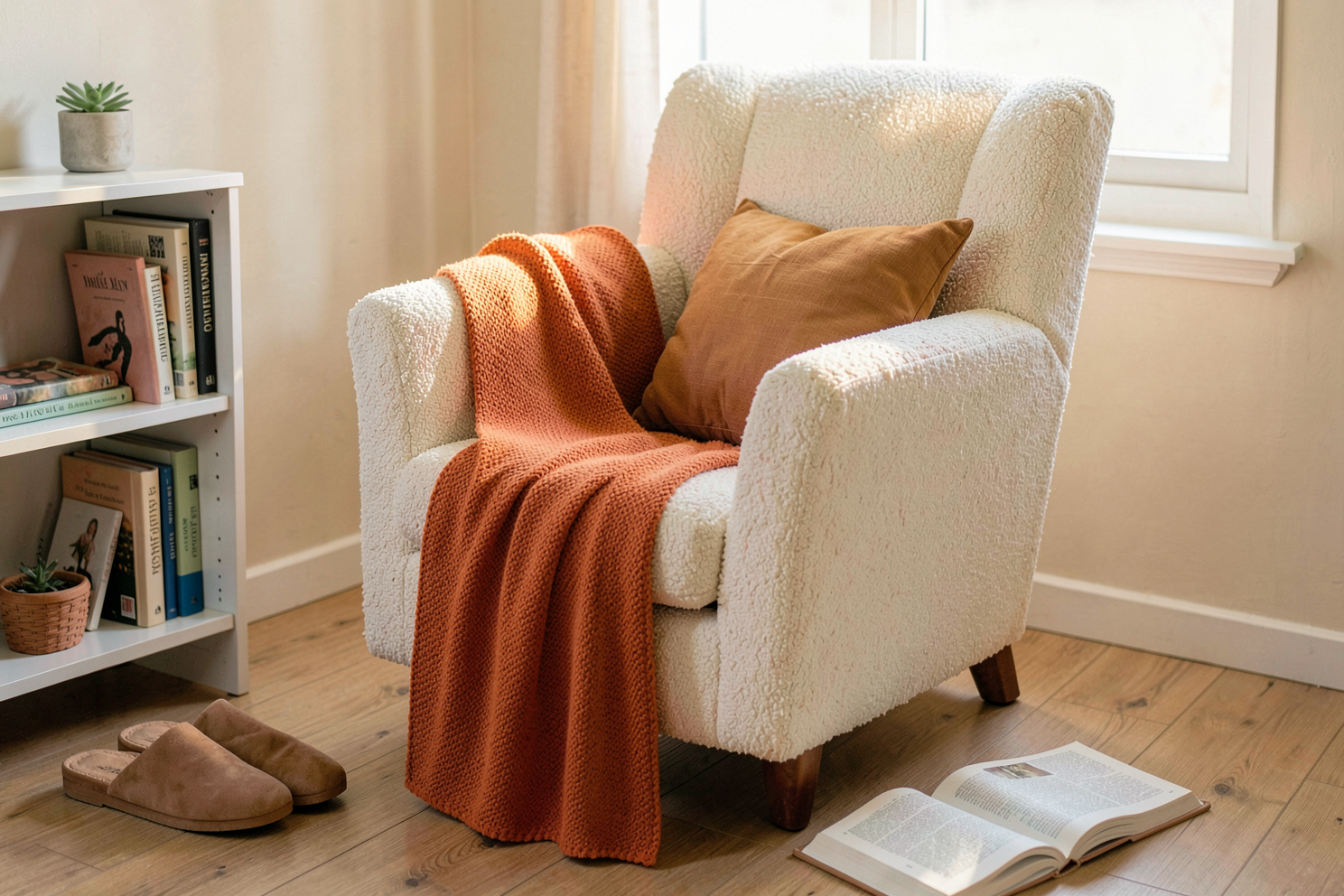
A throw blanket draped over the back of a chair, one corner falling to the seat, is the whole fall reading corner. Not the blanket alone. The fold. I've watched a $20 throw do more for a room than a $90 one, because the person who draped it stopped at one fold instead of piling on three.
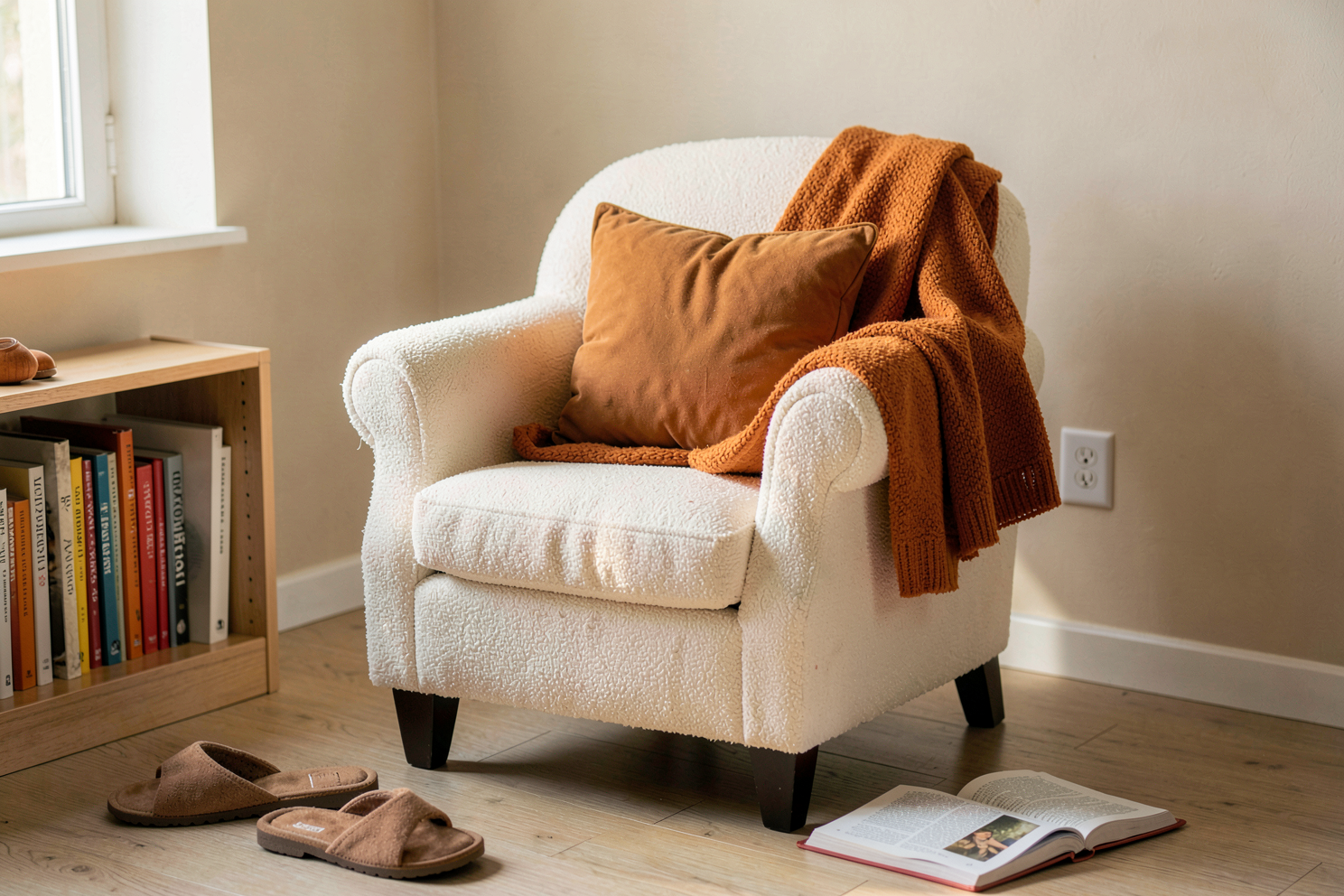
The living room here is 14 by 16 ft, sofa on the west wall, and the reading chair sits by the south window where the afternoon light lands around 3 p.m. That chair gets a throw on it from late September through November. Here's what I've learned about doing it well, and where the trend goes wrong.
What size throw blanket do you need for a chair drape?
A 50 by 60 inch throw is the size that drapes a chair back without pooling on the floor. Smaller than 50 inches wide and the blanket stops mid-back like a bib. Larger than 60 and you're sitting on a puddle of fabric that Biscuit will knead into a nest by Tuesday.
The drape math is simple. Fold the throw in half so you have a 25 by 60 rectangle, then lay it over one corner of the chair back. The 60-inch length gives you a corner that falls to the seat. The 25-inch width keeps it from swallowing the whole chair.
Chunky knit looks great in photos and drapes badly. It's stiff, so it stands up off the chair back instead of following the curve. Same problem with heavy sherpa that's been washed wrong. What you want is a knit or a light fleece with enough weight to fall but enough give to settle. Test it in the store by holding one corner up: if it hangs like a board, it will drape like a board.
Which colors actually read as fall without going orange?
Pumpkin orange is the obvious pick and the one most likely to look like a Halloween decoration by November. The safer fall palette is oat, camel, caramel brown, and a muted rust. Warm without being a costume. My rule: pick a color that also works in January. If it only works in October, it's decor, not a blanket you'll actually use.
Oat and cream are the most forgiving and the most likely to show cat hair, which is a real trade-off in this house. Caramel brown hides everything. Rust sits in the middle and photographs well against a neutral chair.
One thing I'd skip: the matching blanket-and-pillow sets sold as "fall bundles." They read as a catalog page, not a room. Buy the throw, then pull a pillow you already own in a color one shade off. The near-match looks intentional. The exact match looks staged.
How do you drape a throw so it looks folded, not dumped?
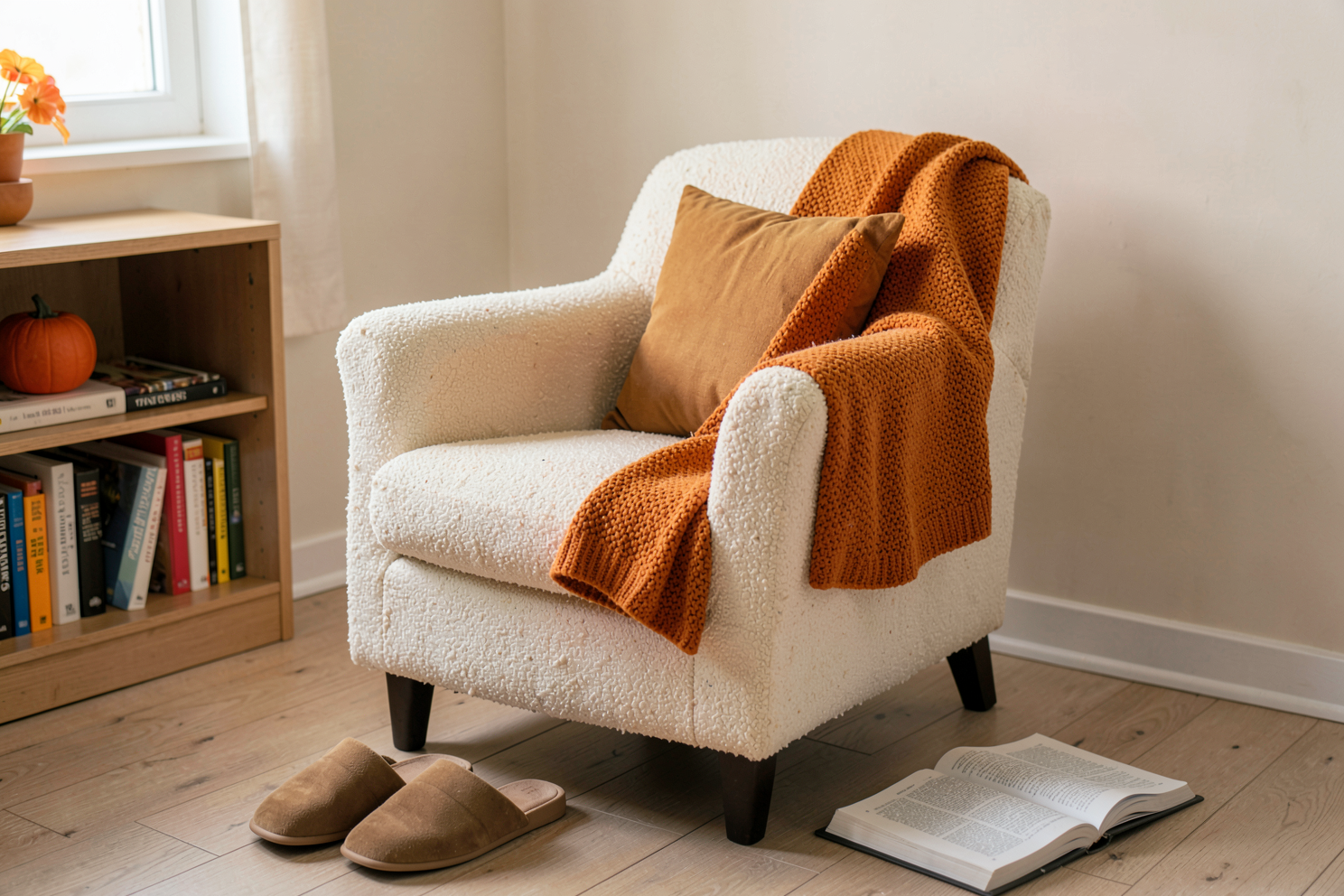
Fold the throw in half, lay it diagonally across one corner of the chair back, and let a single corner fall to the seat. That's it. One fold, one corner down. The mistake almost everyone makes is spreading the blanket flat across the whole chair back, which reads as "laundry waiting to be put away" rather than "someone's reading spot."
The diagonal is what does the work. Straight across looks like a display. Angled looks like a person got up and left it there. That's the goal: a chair that looks recently used by someone who'll be back with a book.
Tuck the top edge slightly behind the chair back so it holds. Then set one pillow at the base of the drape, not centered. Off-center everything. A pillow dead-center on the chair reads as a hotel lobby.
If the throw keeps sliding off a smooth chair back, a single small binder clip on the hidden back edge fixes it. Not elegant. Works.
Do you need a lamp, or does the window do it?
A floor lamp beside the chair does more for the fall feeling than the blanket does, because the whole point is the chair being usable after 5 p.m. The south window here gives good light until about 4, then the corner goes flat. A warm bulb at 2700K in a lamp behind the chair's shoulder makes the drape read as a place to sit instead of a place to look at.
The cheap first step, if you're not ready to buy anything: move the chair to the window and drape whatever throw you already own. Most people have one folded in a closet. Try the fold before you buy a new blanket in a new color. You may find the blanket was never the problem.
I've been burned by the "just add candles and a lantern" version of this, and so has everyone else who pinned it. The textile drape is the part that actually changes how the corner feels, and it's the part you can undo in ten seconds if it's wrong.
Soft recommendations
For the throw itself, search "chunky knit throw 50×60 oat" and look for a cotton or cotton-blend knit rather than acrylic. Acrylic pills after a few washes and the drape goes limp. One real drawback: cotton knit wrinkles and holds the crease from the fold, so you'll be re-draping it more often than a fleece.
For the lamp, search "floor lamp warm bulb reading chair" and check the shade height against your chair back. A shade that sits below your seated eye line throws light in your face. The drawback is floor space. In a 14 by 16 room it's fine, in a tight corner it's a trip hazard.
For the pillow, search "lumbar pillow 12×20 caramel" and go one shade off the throw. Lumbar beats square here because it fills the seat without hiding the drape. Drawback: lumbar pillows slide, so you'll be straightening it.
The one thing to get right
The fold is the whole trick. One diagonal fold, one corner down, one off-center pillow, and a warm bulb behind the chair. You don't need a new chair or a new lamp or a bundle. You need a 50 by 60 throw in a color that survives past October, and the discipline to stop at one fold instead of three.
