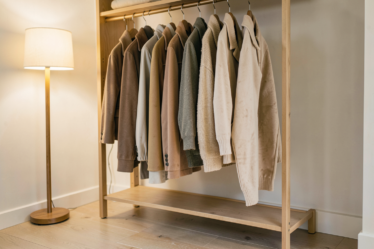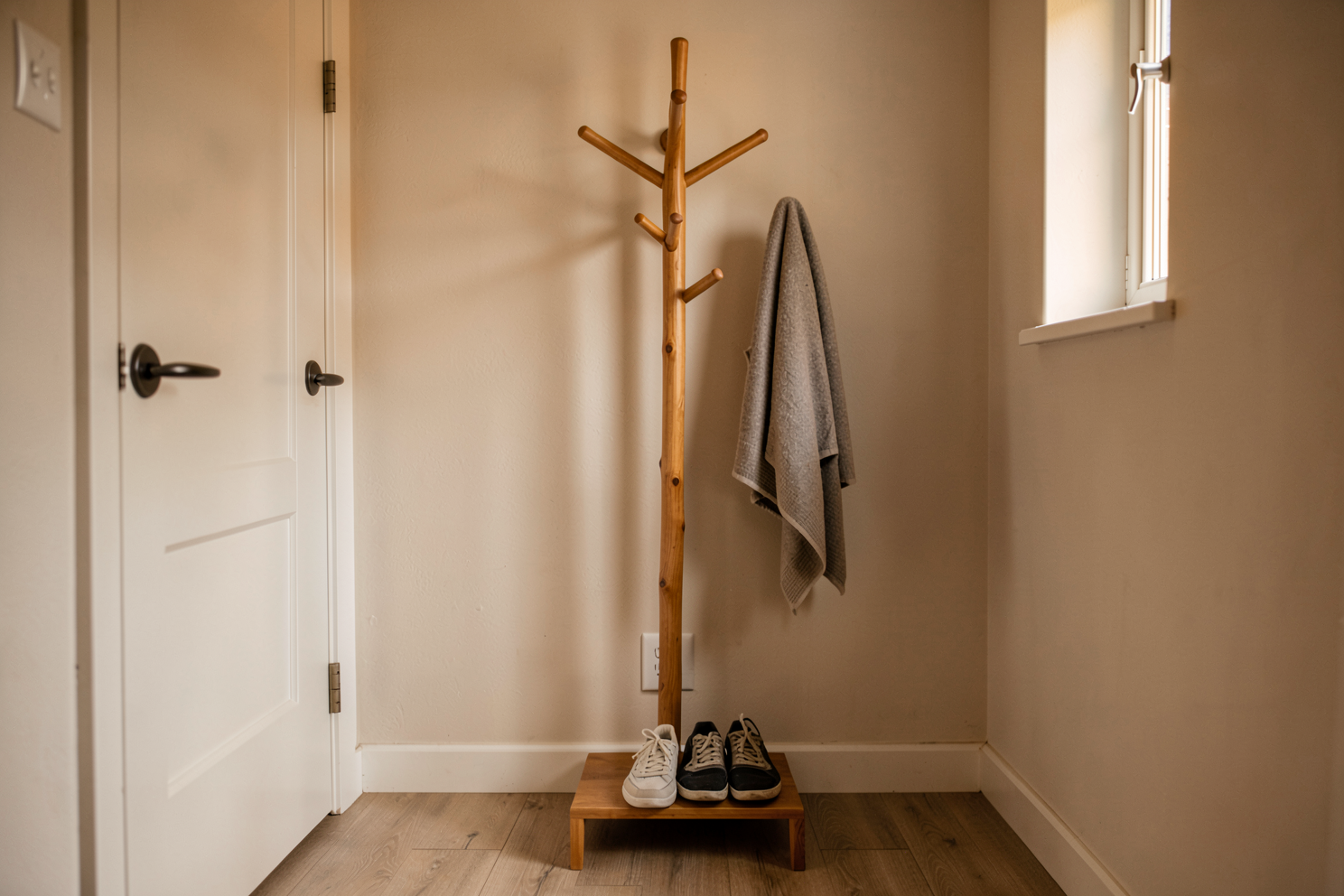
The pile starts about four feet inside the door. Coat comes off, lands on the chair, the chair fills up, and by Thursday you're digging for your keys under a scarf. I know this pile. My last apartment had a 4-ft entryway wall and no closet, and for two years the chair by the door did the job a coat rack should have done.
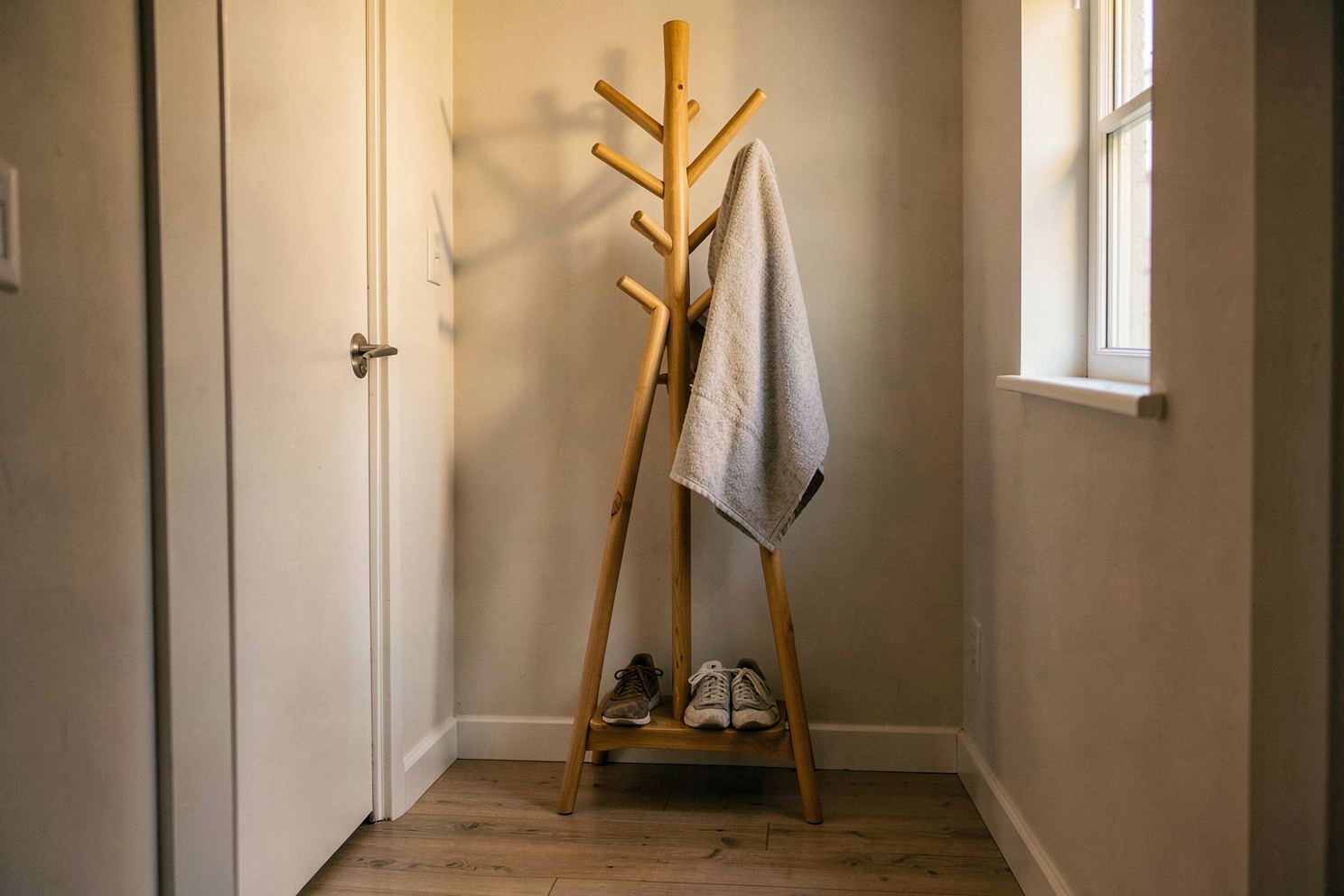
A freestanding coat rack fixes the first six seconds of being home. Not the whole entryway. Just the part where your hands are full and the coat has nowhere to go.
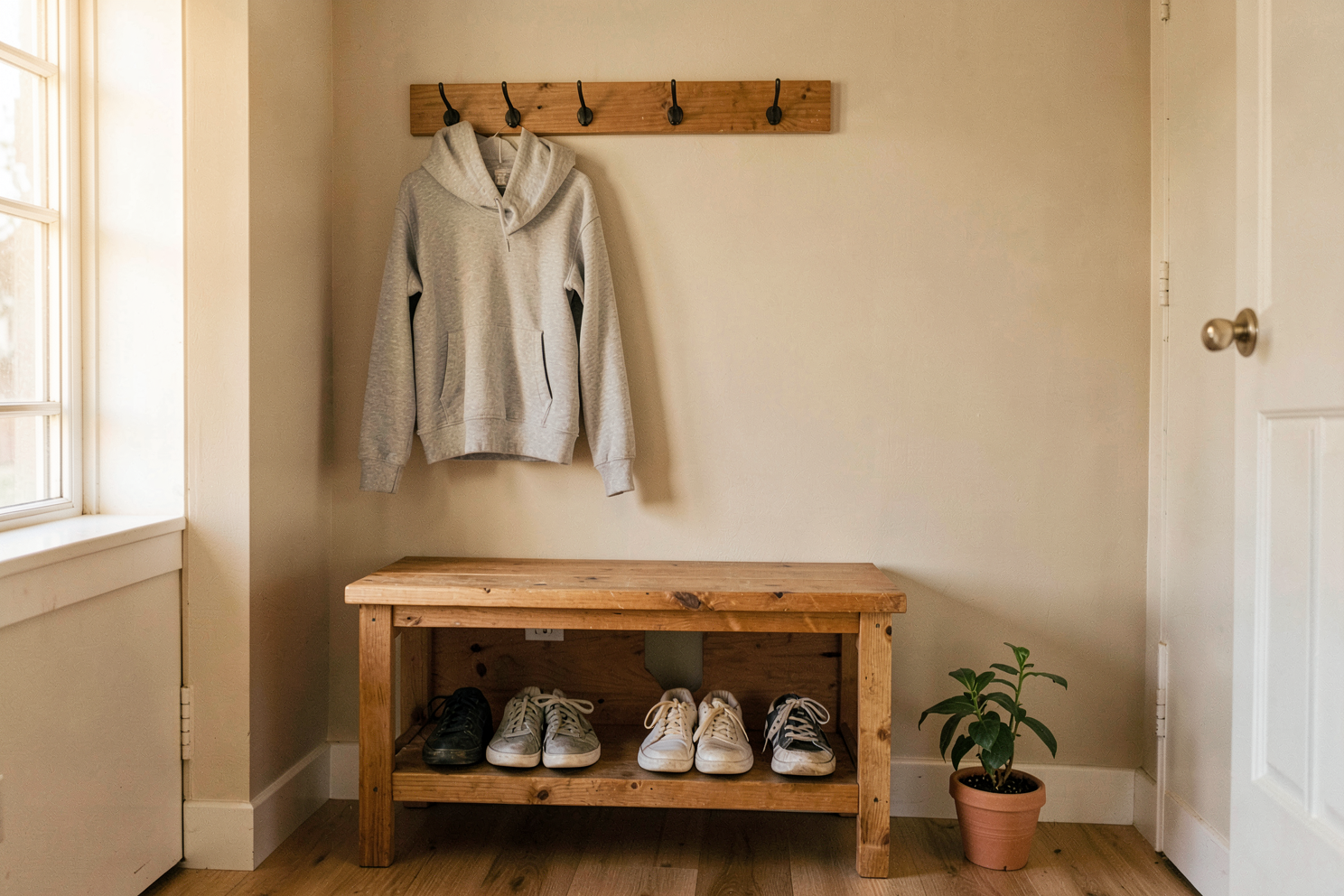
The real problem is the first six seconds
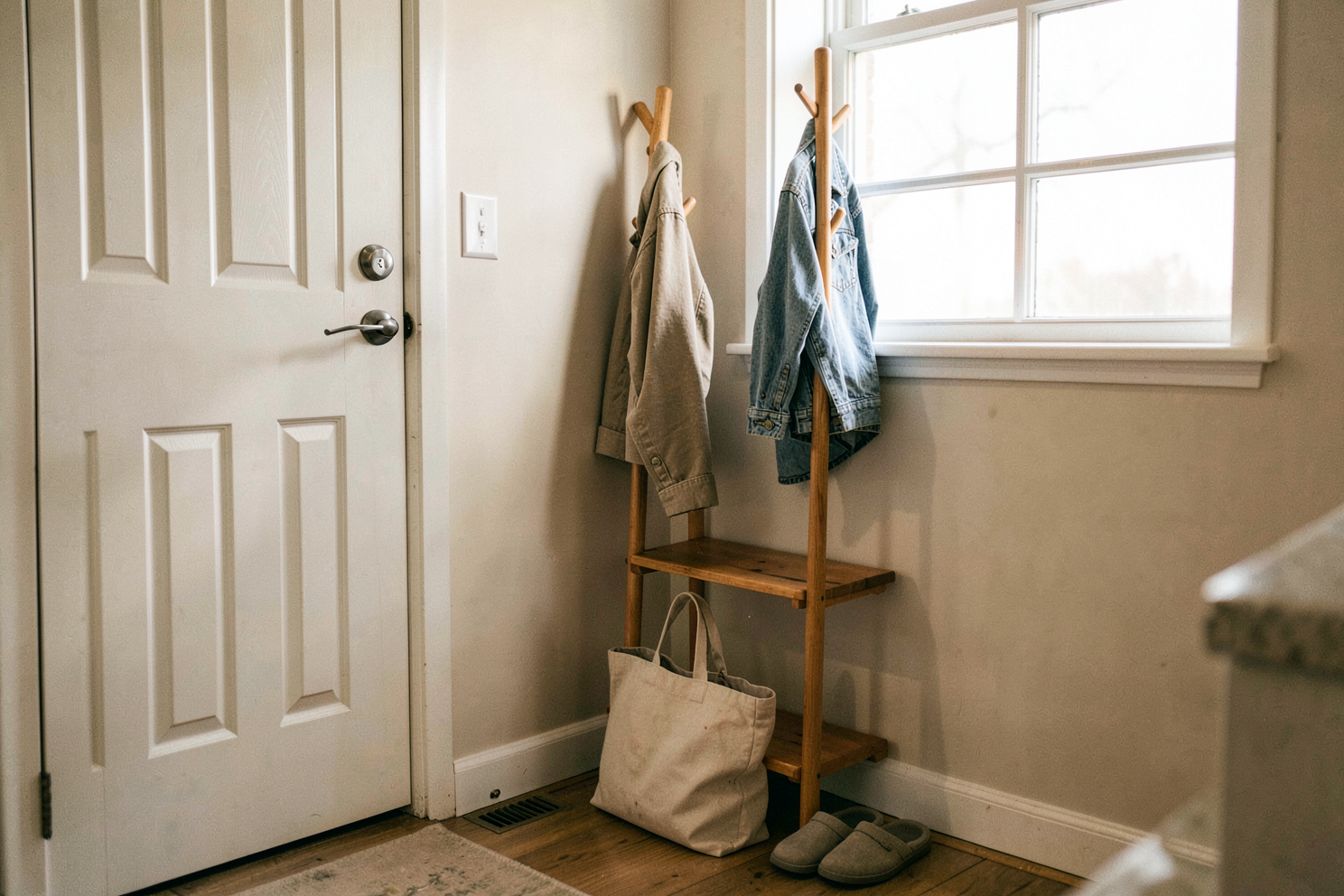
Most entryway advice starts with a bench or a built-in. That's a renovation, not a Tuesday fix. The actual failure point is simpler: you walk in, your hands are full, and there's no hook at arm height within reach of the door. So the coat goes wherever it lands.
A wall-mounted rack needs drilling, and renters don't get to drill. A hall tree is a $200+ piece of furniture that eats floor space you may not have. A freestanding coat rack is the cheapest thing that puts a hook where your hand already is. That's the whole case for it.
Before you buy anything, walk in your door and stand still. Where does your hand naturally go when you're holding groceries? That spot is where the rack belongs, not the corner that looks best from the couch.
How many hooks do you actually need?
Eight is the number most people land on, and it's more than it sounds. A coat rack with 8 hooks holds roughly 4 heavy coats on alternating hooks, plus scarves, a bag, and a dog leash. Hooks that sit too close together turn a full rack into a jumble, so spacing matters more than the count.
If you live alone, 5 to 6 hooks is plenty. If two adults and a kid share the door, go to 8 or more, or accept that the rack will be full by Wednesday. The Pipishell solid wood freestanding coat rack is the entry-level pick here — search "pipishell coat rack" — and it's the one I'd suggest for a single adult or a couple. The drawback: the base is narrow, so it tips if you load all the weight on one side. Load it evenly.
Where does the bottom of the rack go?
The bottom third of a coat rack is wasted space unless you use it. That's the vertical zoning idea: hooks up top for coats, the base for shoes, bags, or a basket. A rack with a shelf or a small bench at the bottom does double duty in a space too small for two pieces of furniture.
This is where the VASAGLE 4-in-1 entryway rack with shoe bench comes in — search "vasagle 4-in-1 coat rack shoe bench." It's the upgrade pick for anyone who wants to sit down to put shoes on, which matters more as you get older or if you have kids. The trade-off is footprint: the bench version takes up noticeably more floor than a bare rack, so measure your door swing before you commit.
Will it fit without blocking the door?
Measure your door swing first, then the rack's base. A freestanding rack needs a base narrow enough to sit flat against the wall and shallow enough that the door clears it. Most entryway racks run 12 to 16 inches deep at the base. If your door opens inward and you have less than 18 inches of wall beside it, a narrow-base rack pushed flush to the wall is your only option.
Push it against the wall, not out in the open. A rack floating in the middle of a hallway gets bumped, and a bumped rack drops everything. Flush to the wall also keeps the walkway clear, which is the whole point of a small entryway.
One more thing: check the height against your door frame. A rack taller than the trim looks cramped in a low entryway, and a rack shorter than your coats leaves hems dragging on the floor.
What I'd skip
Thin acrylic organizers. I've cracked one under the weight of cereal boxes, and I don't trust the material under a wet winter coat. A $20 wooden rack holds more and lasts longer.
Also skip the "looks nice" storage box you buy before you've solved the hook problem. Buying a pretty box is decorating. It doesn't organize anything, and I've done it enough times to know.
The cheapest first step
Before you buy a rack, count what's actually piling up by the door for one week. If it's three coats and a bag, an 8-hook freestanding rack ends the pile for under $25 and takes ten minutes to assemble. If it's shoes, bags, and coats all at once, go straight to the bench version and skip the bare rack.
Start with the measurement, not the product. Stand at your door, find the wall space, and check it against the base depth. That number decides which rack you can actually use.