My closet shelf was the last thing I fixed, and it was the worst thing I owned.
Not the closet floor. Not the hanging rod. The shelf above the rod, the one at roughly eye level that I had been treating as a horizontal dumpster since we moved into this house in 2019. Sweaters stacked six high. A tote bag on top of the sweaters because there was nowhere else. Two scarves that fell every time I pulled a sweater out from the middle, which meant I pulled from the top, which meant the top six inches of every stack was the only part of my wardrobe I actually wore.
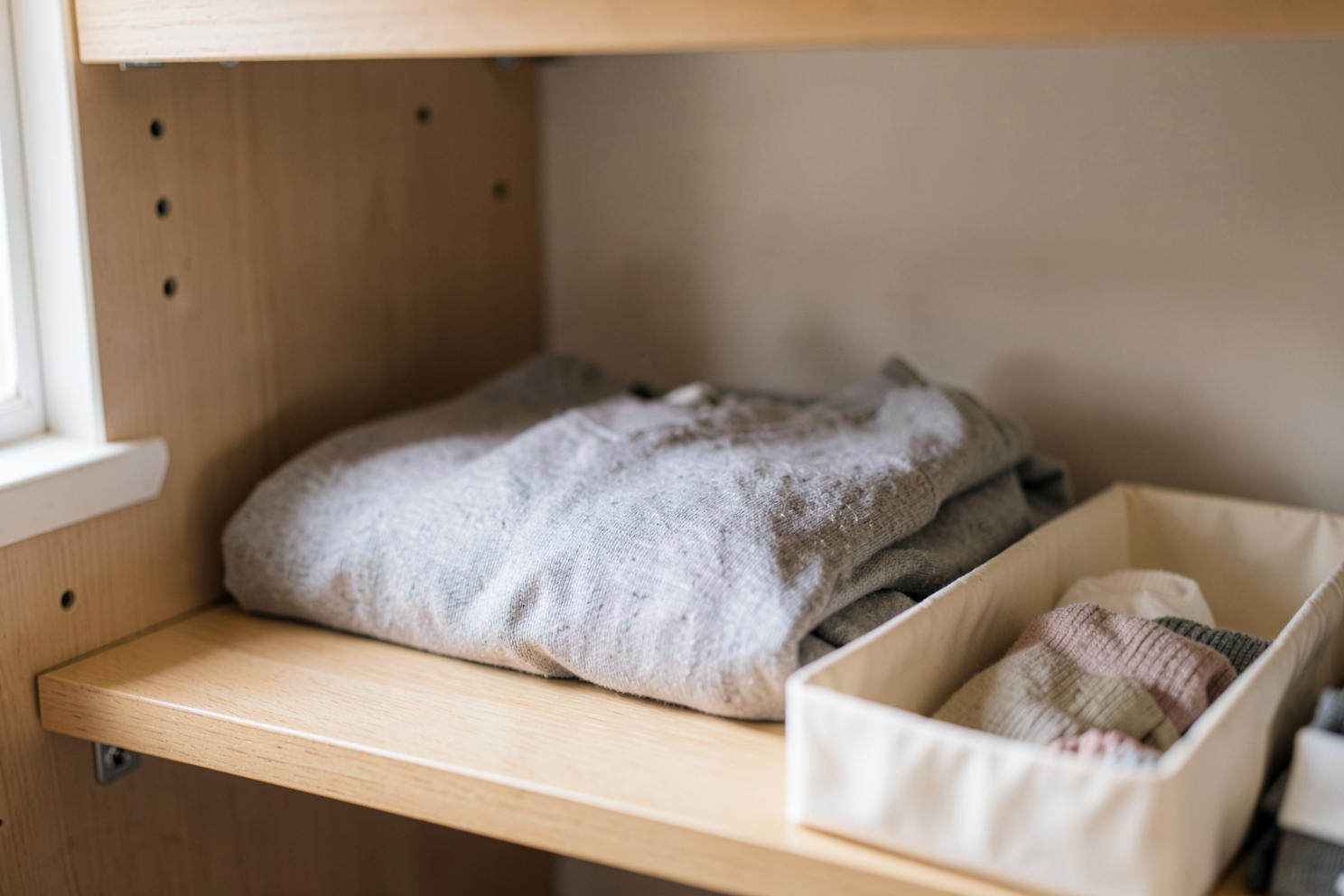
That's the whole problem with a closet shelf, and it has nothing to do with how neat you are. A shelf is a flat surface with no walls. You stack up. You can't see what's in the bottom third. You take one thing and the stack slumps. Then you shove it back and it slumps worse. I did this for four years before I admitted the shelf needed compartments, not discipline.
Why a closet shelf collapses (it's not you)
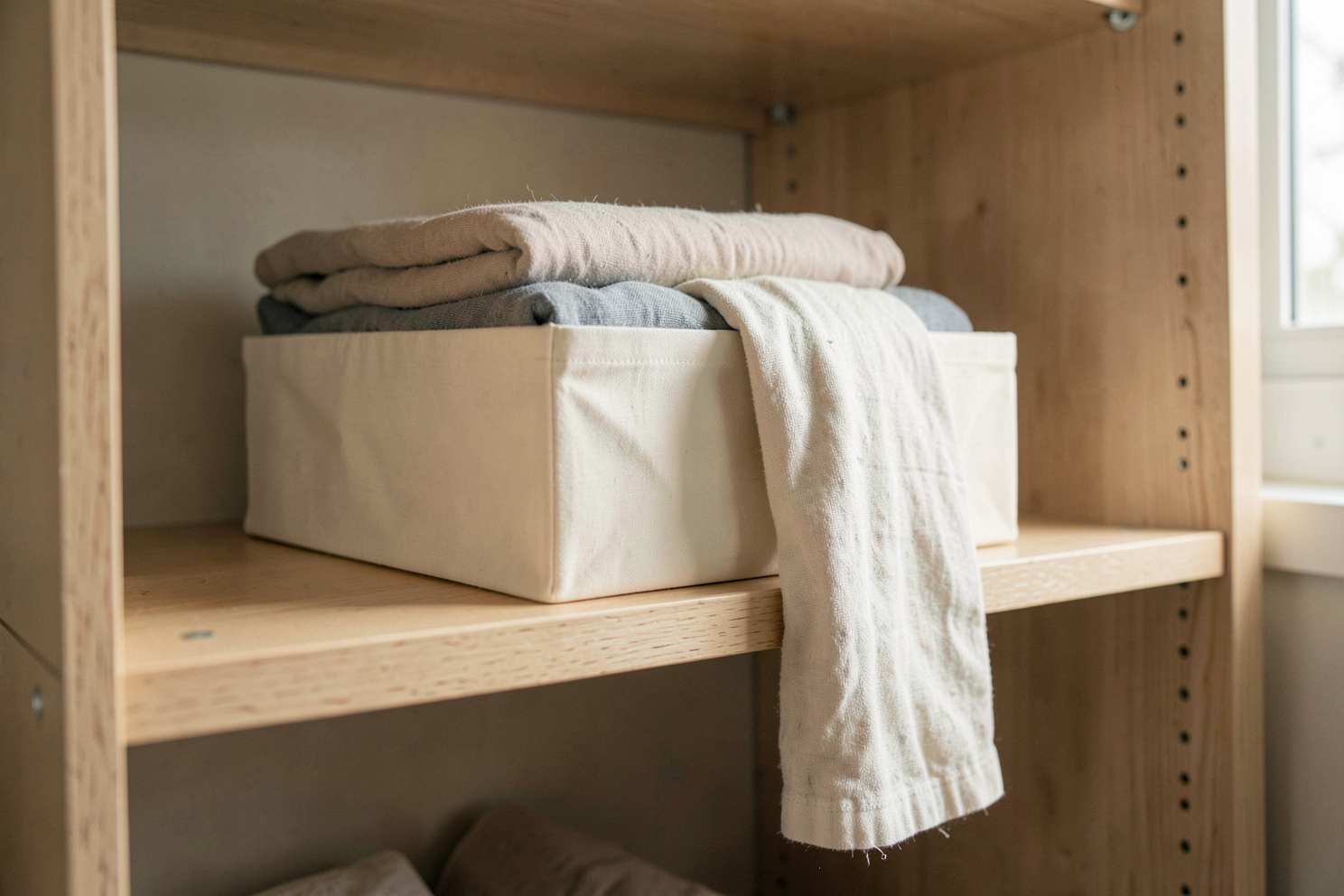
A shelf has no sides, so every stack is held up by friction and hope. Stack height makes it worse: once a pile passes about three items, the bottom layer is invisible from standing height, and invisible things don't get used. You stop wearing them, then you stop seeing them, then in March you find a sweater you forgot you owned.
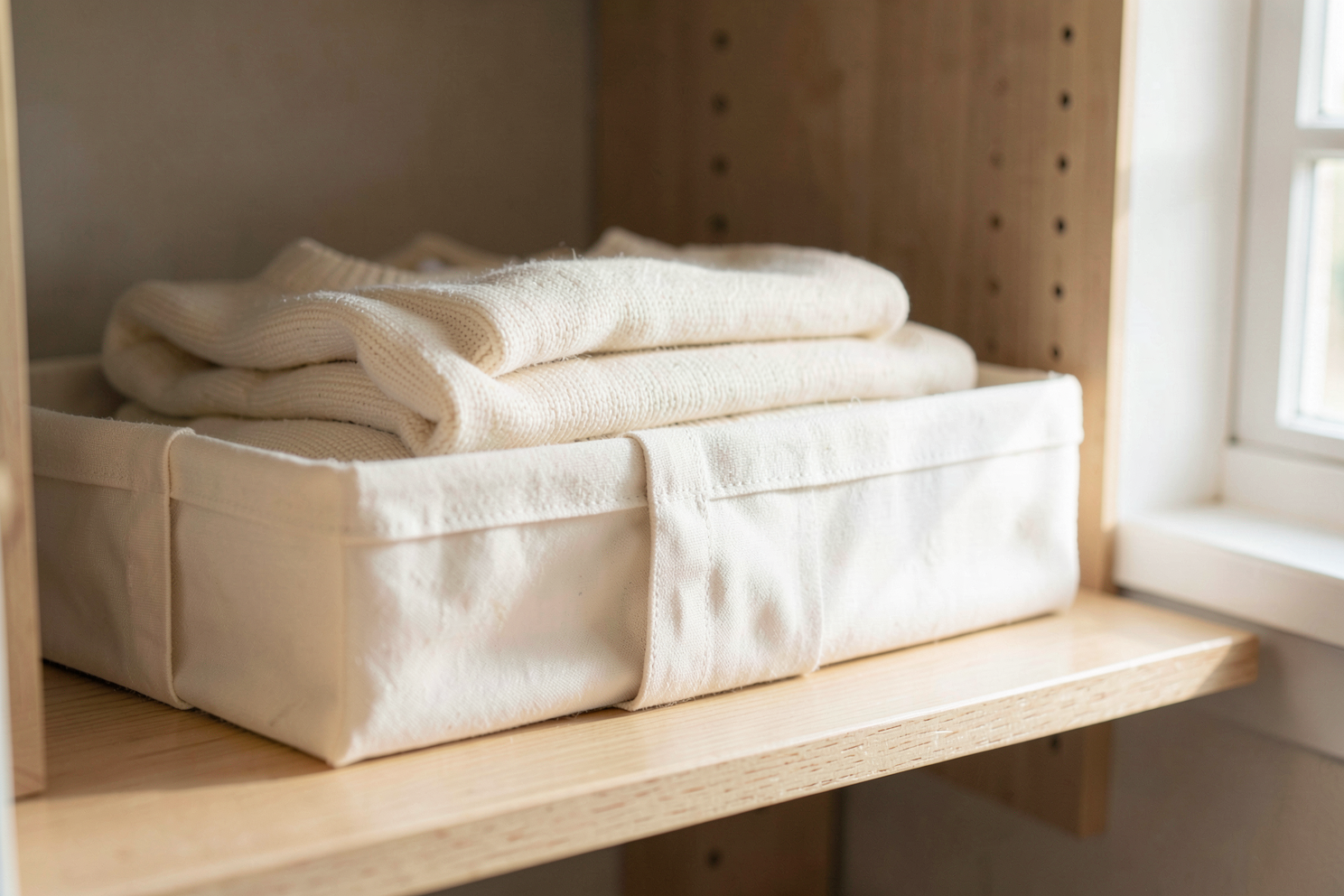
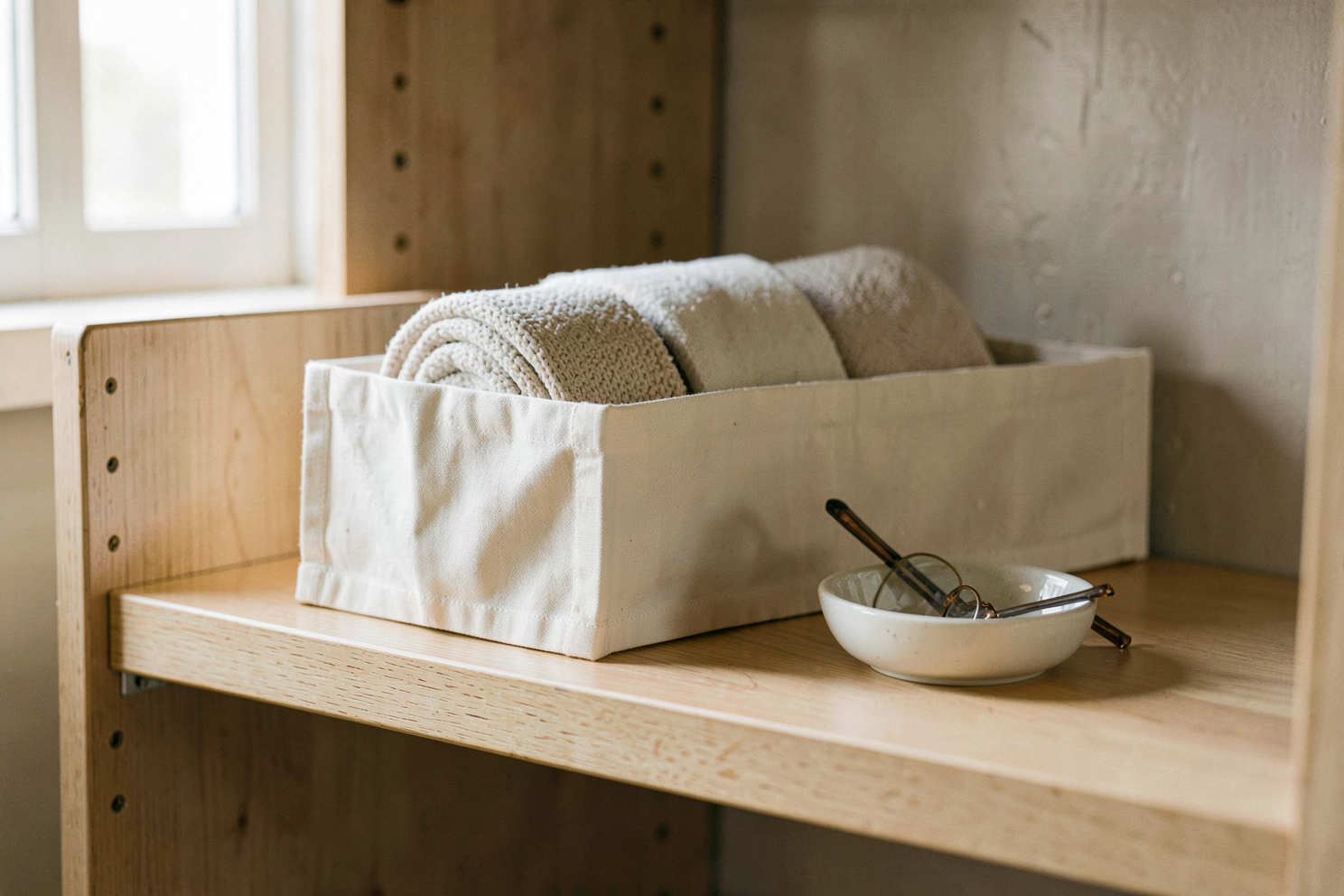
The fix is containment. Soft dividers give a shelf the walls it doesn't have, and because they're fabric, they don't scrape the shelf or rattle when the cat jumps up on the dresser next to it. Biscuit does this daily. Nothing has cracked yet.
The three-step zoning method
Step one: sort by category, not by color. This is the step people skip. Pull everything off the shelf onto the bed and group by what it is — knitwear, folded t-shirts, linens, bags, whatever lives up there. Color-sorting looks better in photos and fails in practice, because you don't get dressed by color, you get dressed by "I need a sweater."
Step two: assign zones by reach frequency. The middle of the shelf, directly above where you stand, is your daily zone. That's where the things you wear weekly go, at the front edge. The far left and far right are for weekly-to-monthly items. The back row, behind everything, is for the once-a-season layer — the heavy knits in July, the light cardigans in January. If you're short, put your daily zone on the lower shelf and treat the top shelf as storage only. I'm 5'4" and I stopped pretending I can reach the top shelf without the step stool. It holds off-season now.
Step three: one category per compartment, and leave two empty. This is the part I got wrong the first time. I filled all twelve compartments and the shelf looked great for about three weeks. Then I bought two sweaters and had nowhere to put them, so they went on top of a compartment, and the whole system started sliding. Empty compartments are not wasted space. They're the reason the system survives October.
How many compartments do you actually need?
For a standard 30-to-36 inch closet shelf holding folded clothes, twelve compartments covers one shelf with room to spare. That works out to roughly three compartments per category across four categories, which is enough to keep a stack from forming anywhere. If your shelf runs the full width of a closet — say 60 inches or more — eighteen is the better buy, because twelve will leave you with an uncontained stretch at one end, and that stretch is where the collapse starts.
What I'd actually buy
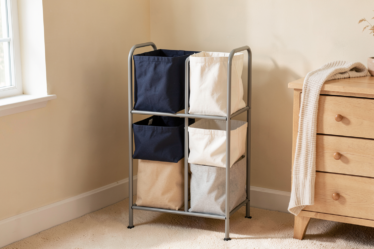
The Fordonral 12-pack foldable fabric bins are the ones I'd start with. Search "Fordonral 12 pack foldable fabric organizer" and you'll land on them. They're soft-sided, they fold flat, and the set is cheap enough that buying two sets costs less than one hard plastic drawer tower — which matters, because two sets let you run one on the shelf and keep one flat in a bin for rotation. The drawback: the fabric is thin enough that a heavy stack of denim will make the sides bow outward over time. Keep denim on a shelf with a solid bin, not these.
If you want the upgrade, the DIMJ 18-pack runs a few dollars more and gives you six extra compartments, which is the difference between covering a full-width shelf and covering most of it. Search "DIMJ 18 pack foldable fabric organizer." Same caveat on structure — these are dividers, not load-bearing boxes. Don't stack them on top of each other and expect the bottom one to hold.
One thing I'll say plainly: I have a grudge against thin acrylic organizers after a set cracked under a row of cereal boxes in my kitchen. Fabric dividers don't crack. They also don't look like a dorm room, which is why they ended up in my closet instead.
What about when the season changes?
Fold them flat and store them flat. That's the entire advantage of fabric over plastic here — twelve compartments collapse to about the thickness of a folded sweater, so off-season storage takes one bin, not a shelf. I do this twice a year, in March and October, when I purge coats and swap the shelf contents. The dividers go into the same bin as the off-season knits. When October comes back around, I pull the bin, unfold the dividers, and rebuild the same zones in about ten minutes, because the categories haven't changed.
The mistake is leaving them set up year-round with nothing in them. Empty compartments collect loose items — a charger, a hair clip, a receipt — and by the next season you're sorting junk instead of clothes.
Do foldable fabric dividers actually stay upright?
Yes, if you fill them. An empty soft-sided compartment slumps at the corners, because there's no rigid frame holding the shape. Fill each one about two-thirds with folded items and the fabric holds its structure fine. The ones that flop are the ones you left half-empty, which is another argument for leaving only two spare compartments instead of five.
Can you use these on a wire shelf?
They work, but you need a flat base under them. Wire shelving has gaps, and a soft-bottomed divider will sag into the gap and sit crooked. A piece of shelf liner or a thin sheet of corrugated plastic under the row fixes it for a few dollars. If your closet is all wire, cut the liner to the shelf depth before you set anything down — doing it after means unloading the whole shelf again.
Do they fit standard closet shelf depth?
Most closet shelves are 12 inches deep, and standard foldable fabric dividers are built for roughly that. Measure yours before ordering, because a 16-inch shelf leaves a gap at the back where things disappear, and a 10-inch shelf means the dividers overhang the front edge. Both are fixable — push the row forward on a deep shelf, or run the row lengthwise on a shallow one — but you want to know which problem you have before the box arrives.
Start with one shelf
Don't buy dividers for the whole closet. Pick the one shelf that's currently a pile, empty it onto the bed, sort it into four categories, and set up twelve compartments with two left empty. Live with it for a month. If it holds, buy the second set for the next shelf. If it doesn't, you're out less than the cost of a takeout dinner, and you'll know whether the problem was the shelf or the system.