The lean is the problem, not the cutting boards.
You know the lean. Two boards, a sheet pan, and a rimmed baking sheet, all propped against the wall at slightly different angles, all one nudge away from a domino collapse. You reach for the small one and take down the big one. I have done this with [NEED: specific food/scene from Mia's kitchen] and I do not recommend it.
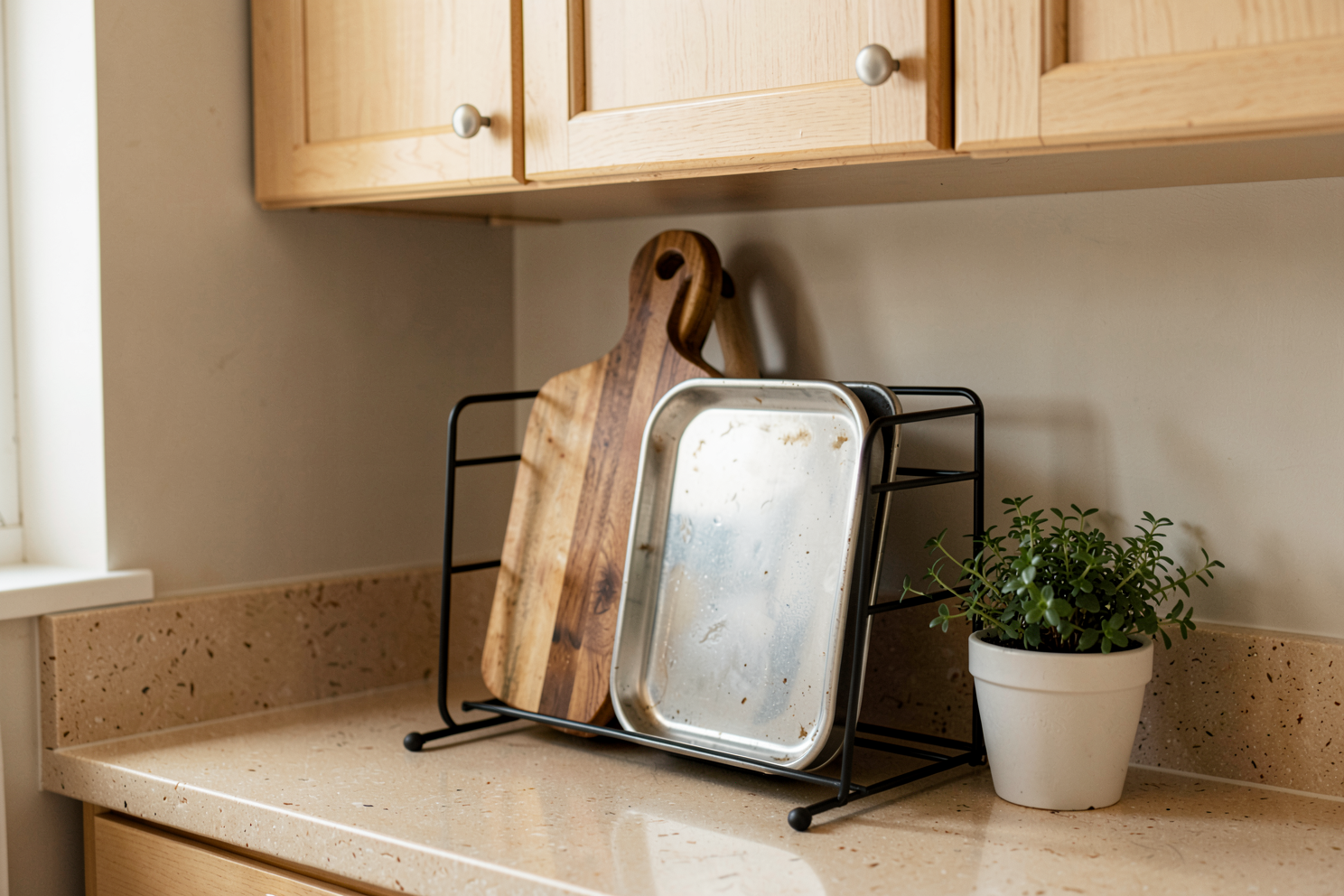
A rack fixes it in about four minutes. That's the whole article. Everything below is which rack, what fits, and where it should not go.
The rack that's actually worth $26 (a two-pack, black, no drilling)
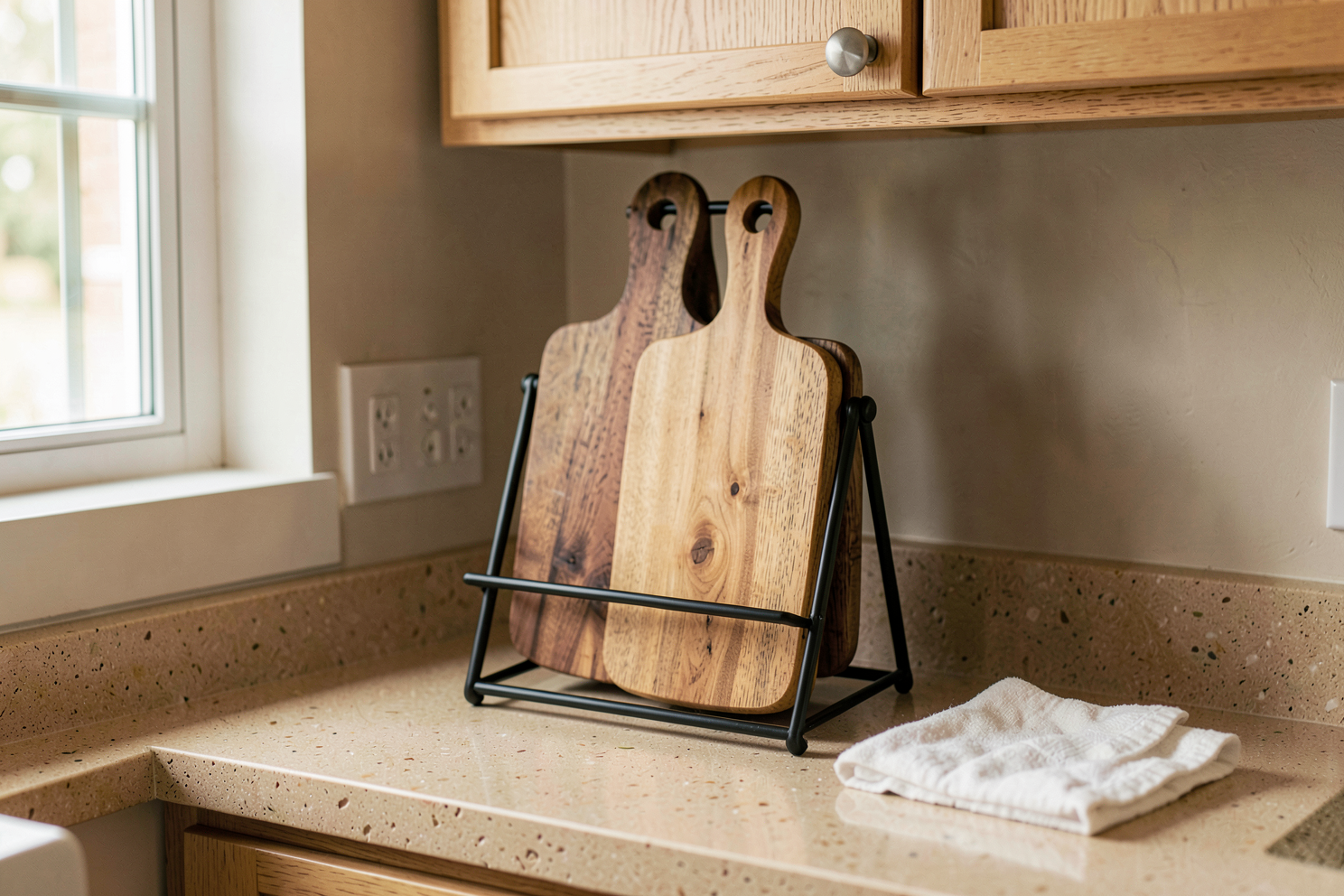
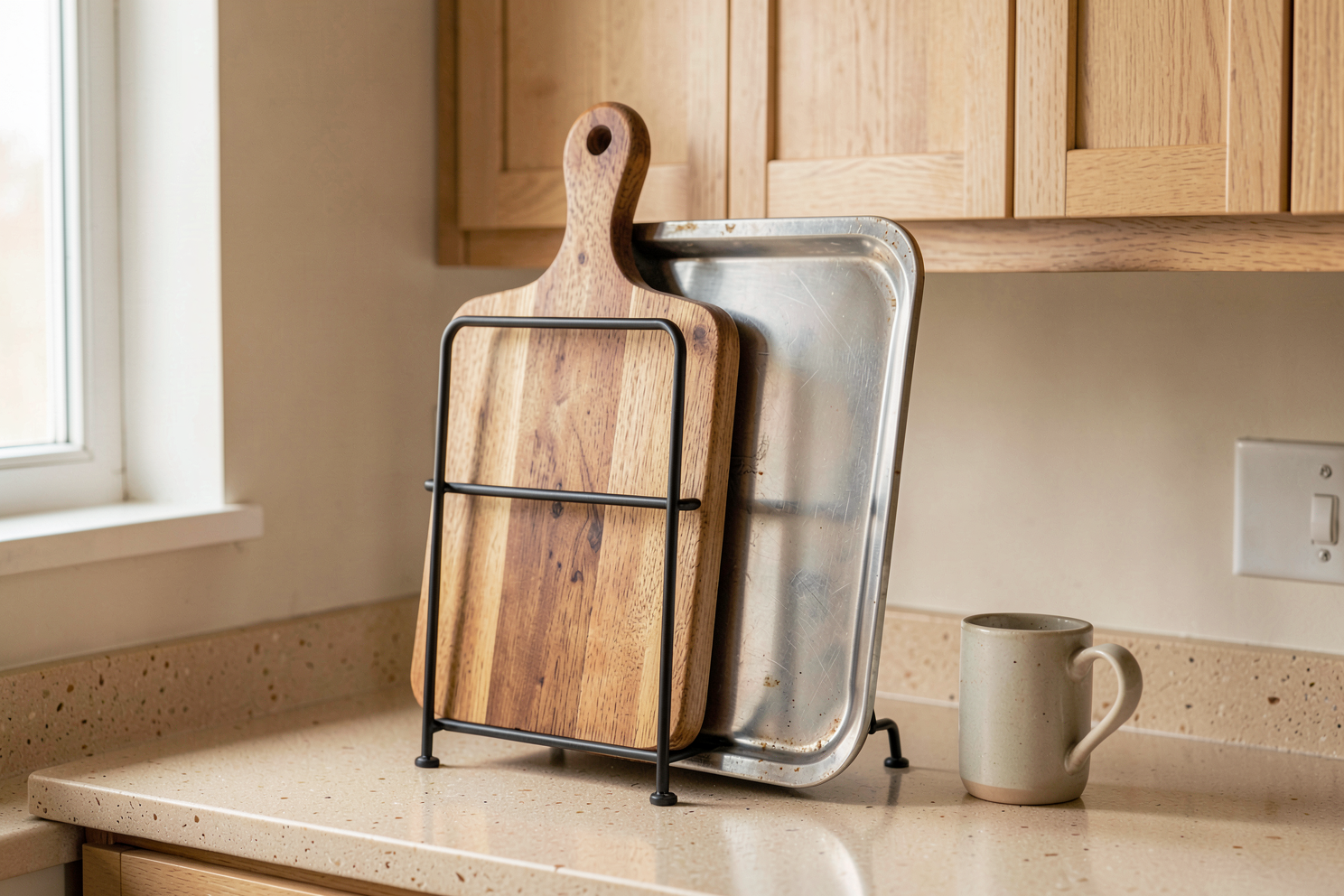
TEAMOLA makes a metal cutting board organizer — the adjustable bakeware rack, sold as a 2-pack in black, search "cutting board organizer rack counter." It stands boards and bakeware upright on their edges, and the dividers adjust, which matters more than it sounds like it should.
Why adjustable wins: your boards are not the same thickness. A 1-inch butcher block and a 1/4-inch flexible mat in fixed slots means one slot is useless and the other is cramped. I have owned a fixed-slot rack. It held two things well and rejected everything else.
The 2-pack is the real argument for this one. One rack in the corner by the stove for the boards you use daily, one in the cabinet for the sheet pans. Splitting the set is the reason I'd buy this over a single larger unit.
The drawback: black metal fine-frame racks show flour dust and grease film immediately. Wipe it weekly or it looks grimy in a way a wood rack hides.
What actually fits, and what doesn't
Tall boards go in the back slot, small ones in front, and nothing touches. That's the whole layout.
What fits well: – Standard 15 x 20-inch plastic boards, up to about 4 boards in a 2-pack's worth of slots – Half sheet pans (13 x 18 inches) standing on their long edge – Rimmed baking sheets, muffin tins, and a 9 x 13 pan – Flexible silicone mats, rolled or folded, in a front slot
What doesn't: – Anything wider than roughly 18 inches. A full sheet pan will not stand upright in a counter rack — it needs a cabinet or a wall mount. – Glass boards over about 3 lbs. They fit, but the rack tips when the cat jumps on the counter, and I say that from experience with a different rack, not this one. – Round cake pans. They roll. Put them flat.
[NEED: measurement of Mia's own largest cutting board and how it sat in the rack, if she has tested this product]
Where it goes (and where it doesn't)
The corner next to the stove, if you have 9 inches of counter depth to spare. That's the reachable spot — you grab a board, you use it, you put it back without walking.
Three placements that fail:
Against the backsplash behind the sink. Water splashes, the rack rusts at the base, and you're reaching across a wet zone every time.
Under an upper cabinet with less than 14 inches of clearance. You'll pull the rack forward to get the tall board out, and now the rack lives half off the counter permanently. I've watched this happen in my own kitchen.
On a rental counter with a rounded front edge. Most of these racks have flat feet and no clamp. On a bullnose edge they slide. Not dangerous, just annoying, and it means you'll stop using it.
No drilling required for any of this, which is the point for renters. Nothing mounts to the wall. It sits there.
Does a cutting board rack actually save counter space?
Yes, and the number is bigger than people expect. A stack of three boards lying flat eats roughly 15 x 20 inches of counter — about 300 square inches. Standing on edge in a rack, the same three boards take a footprint around 5 x 20 inches, or 100 square inches. You get back about two square feet of work surface, which in a galley kitchen is the difference between one prep zone and two.
Should you buy a 2-pack or a single rack?
Buy the 2-pack if you own sheet pans, which is most people. A single rack holds boards; the second one holds bakeware inside a cabinet, where vertical storage is the only way to fit four pans in a 12-inch-wide space. At this price the second rack costs less than the gas to go back for it.
Metal, bamboo, or acrylic?
Metal, in this size range. Bamboo racks look warmer and hide dust better, but the ones I've handled have fixed slots and swell in humid kitchens. Acrylic is the one to skip — thin acrylic dividers crack under weight, and I have a cracked acrylic organizer in my garage right now that failed under cereal boxes, not even bakeware. A rack holding a 3-lb glass board is asking more of acrylic than it can give.
The cheapest first step
Before you buy anything, take the boards off the counter and stand them on edge against the wall in the corner you're considering. Live with it for two days. If the spot is annoying to reach, no rack fixes that — you'll just have a tidier version of a bad location.
If the spot works, search "cutting board organizer rack counter" and get the TEAMOLA adjustable 2-pack in black. It's the version of this that doesn't require you to measure your boards first, and the second rack earns its place in the cabinet.
One warning: this rack holds boards. It does not hold your lids, your colander, or the pan you "might need later." Those still need a home, and a rack full of almost-fits is just the lean with extra steps.
• TEAMOLA TEAMOLA Metal Cutting Board Organizer – Adjustable Bakeware Rack 2-Pack, Black · 26.31 — A 2-pack adjustable metal rack at $26.31 that stands cutting boards and bakeware upright, ending the counter lean without drilling.